Quick Answer
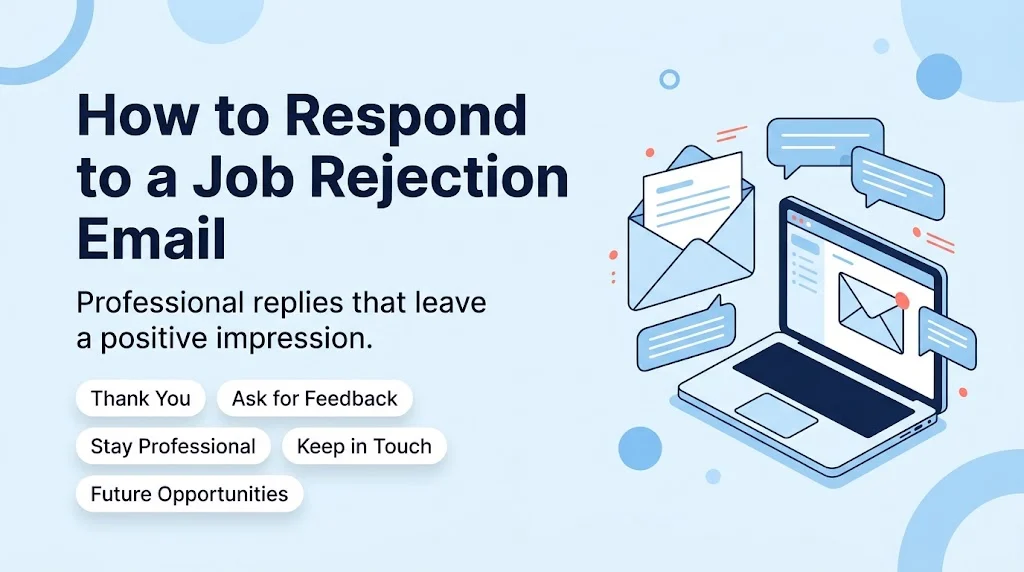
The best way to respond to a job rejection email is to thank the hiring manager for their time, acknowledge the decision professionally, and leave a positive impression for future opportunities. Keep your message polite, confident, and brief.
Top alternatives: Thank you for the update, I appreciate your consideration, thank you for the opportunity, I welcome future opportunities, I appreciate your feedback.
Getting a job rejection email can feel disappointing, especially when you spent hours perfecting your resume, preparing for interviews, and imagining yourself in the role. You might want to reply immediately, leave the email unanswered, or type a paragraph explaining why you deserved the job. Before you do anything, remember that your response can help you leave a positive impression, even when the answer is not what you hoped for. Knowing how to respond to a job rejection email gives you a chance to thank the hiring manager, ask for constructive feedback, maintain professional connections, and keep the door open for future opportunities. Whether you want a short reply, a formal email, or a confident message that shows maturity, the right words can help you handle the situation gracefully. A rejection is disappointing, but it does not define your professional potential.
Polite Responses
– Thank you for letting me know.
Example: Use this when a recruiter sends a straightforward rejection email.
Meaning: It acknowledges the decision respectfully.
– Thank you for considering my application.
Example: Use this after receiving an update following your application.
Meaning: It expresses appreciation for the employer’s time.
– I appreciate you taking the time to update me.
Example: Use this when a hiring manager personally informs you of the decision.
Meaning: It recognizes their effort to communicate.
– Thank you for the opportunity to interview.
Example: Use this after completing an interview but not receiving an offer.
Meaning: It shows gratitude for the interview experience.
– I appreciate your consideration and wish your team the best.
Example: Use this when you want to end the conversation on a positive note.
Meaning: It communicates professionalism and goodwill.
– Thank you for your time and consideration throughout the process.
Example: Use this after several interview rounds.
Meaning: It recognizes the time invested by both sides.
– I appreciate the update and your transparency.
Example: Use this when the recruiter clearly explains the outcome.
Meaning: It acknowledges the value of honest communication.
– Thank you for reviewing my application.
Example: Use this after receiving a rejection at the application stage.
Meaning: It keeps your reply simple and respectful.
– I appreciate the opportunity to learn more about your organization.
Example: Use this when the interviews helped you understand the company.
Meaning: It highlights the positive side of the experience.
– Thank you for keeping me informed.
Example: Use this when a recruiter follows up after a long wait.
Meaning: It expresses appreciation for the update.
– I respect your decision and appreciate your consideration.
Example: Use this when you want a calm, professional response.
Meaning: It acknowledges the outcome without arguing.
– Thank you for your thoughtful communication.
Example: Use this when the hiring manager sends a personalized message.
Meaning: It recognizes their professional courtesy.
– I appreciate the chance to be considered for the position.
Example: Use this when replying to a formal rejection.
Meaning: It expresses gratitude for the opportunity.
– Thank you again for your time.
Example: Use this as a short closing line in your reply.
Meaning: It ends the message politely.
– I wish you and the team continued success.
Example: Use this when wrapping up the hiring conversation.
Meaning: It leaves the relationship on a friendly note.
Professional Responses
– Thank you for the update. I appreciate your consideration.
Example: Use this when responding to a recruiter or hiring manager.
Meaning: It maintains a professional tone.
– I appreciate the opportunity to discuss the role with your team.
Example: Use this after a formal interview.
Meaning: It recognizes the interview process positively.
– Thank you for considering my qualifications.
Example: Use this when the employer selects another candidate.
Meaning: It acknowledges their evaluation of your application.
– I understand your decision and appreciate your time.
Example: Use this when you want to accept the outcome gracefully.
Meaning: It shows maturity and respect.
– Thank you for sharing the outcome of the selection process.
Example: Use this after receiving an official hiring update.
Meaning: It acknowledges the decision in formal language.
– I appreciate the opportunity to meet with your team.
Example: Use this after attending an interview panel.
Meaning: It conveys professional gratitude.
– Thank you for your consideration and professionalism throughout the process.
Example: Use this after multiple rounds of interviews.
Meaning: It recognizes the employer’s efforts.
– I appreciate your time and wish you success with the appointment.
Example: Use this when the employer has selected another candidate.
Meaning: It closes the conversation respectfully.
– Thank you for reviewing my candidacy for this position.
Example: Use this in a formal email to a hiring department.
Meaning: It communicates appreciation professionally.
– I value the opportunity to have been considered.
Example: Use this when replying to a competitive recruitment process.
Meaning: It shows gratitude without sounding disappointed or resentful.
– Thank you for the clear communication regarding your decision.
Example: Use this when the recruiter provides a direct update.
Meaning: It acknowledges the clarity of the process.
– I appreciate your team’s time and consideration.
Example: Use this after meeting several interviewers.
Meaning: It recognizes the contributions of the hiring team.
– Thank you for the opportunity to discuss my experience and qualifications.
Example: Use this when you had an in-depth interview.
Meaning: It highlights the value of the discussion.
– I respect the outcome and appreciate your professional courtesy.
Example: Use this in a formal response to a rejection.
Meaning: It communicates composure and respect.
– Thank you again for considering me for the role.
Example: Use this as your final sentence before signing off.
Meaning: It ends the exchange on a professional note.
Short And Simple Responses
– Thank you for the update.
Example: Use this when you want to acknowledge the email quickly.
Meaning: It is polite and direct.
– I appreciate your consideration.
Example: Use this after receiving a brief rejection notice.
Meaning: It expresses gratitude in a few words.
– Thank you for your time.
Example: Use this when the process was short.
Meaning: It acknowledges the employer’s effort.
– I appreciate the opportunity.
Example: Use this when you want a concise reply.
Meaning: It shows gratitude.
– Thank you for letting me know.
Example: Use this after a recruiter shares the decision.
Meaning: It confirms receipt of the update.
– I understand. Thank you for the consideration.
Example: Use this when a simple acknowledgment is appropriate.
Meaning: It accepts the decision respectfully.
– Thank you for getting back to me.
Example: Use this after waiting for an application update.
Meaning: It appreciates the response.
– I appreciate the follow-up.
Example: Use this when the recruiter contacts you after an interview.
Meaning: It acknowledges their communication.
– Thank you for the opportunity to apply.
Example: Use this after an application rejection.
Meaning: It recognizes the chance to be considered.
– Wishing your team all the best.
Example: Use this as a brief closing sentence.
Meaning: It leaves a positive impression.
– Thank you again for your time.
Example: Use this when ending a short email.
Meaning: It conveys courtesy.
– I appreciate the update and wish you well.
Example: Use this when you want to finish on a friendly note.
Meaning: It communicates goodwill.
– Thanks for keeping me informed.
Example: Use this in a friendly but professional exchange.
Meaning: It acknowledges the recruiter’s update.
– Thank you for the response.
Example: Use this when replying to a straightforward decision.
Meaning: It is neutral and respectful.
– I appreciate your time and consideration.
Example: Use this as a complete short reply.
Meaning: It expresses gratitude without unnecessary detail.
Confident Responses
– Thank you for considering me. I remain confident in the value I can bring to the right opportunity.
Example: Use this when you want to maintain a positive professional image.
Meaning: It shows self-belief without criticizing the decision.
– I appreciate the opportunity and look forward to pursuing roles aligned with my experience.
Example: Use this when you are continuing your job search.
Meaning: It communicates direction and confidence.
– Thank you for the update. I will continue building on my experience and skills.
Example: Use this after a rejection that encourages you to improve.
Meaning: It shows a growth mindset.
– I appreciate your consideration and remain enthusiastic about my career goals.
Example: Use this when responding to a competitive hiring process.
Meaning: It communicates optimism.
– Thank you for the opportunity to present my qualifications.
Example: Use this after completing an interview.
Meaning: It shows confidence in your professional contribution.
– I respect your decision and will continue exploring suitable opportunities.
Example: Use this when you want to close the conversation positively.
Meaning: It shows resilience and forward thinking.
– Thank you for your time. I look forward to the next opportunity to contribute my skills.
Example: Use this when you want to emphasize future potential.
Meaning: It maintains a constructive outlook.
– I appreciate the experience and will carry the lessons forward.
Example: Use this when the interview taught you something useful.
Meaning: It frames the experience as professional development.
– Thank you for considering my application. I remain committed to my professional growth.
Example: Use this when you want to highlight your dedication.
Meaning: It conveys determination.
– I appreciate your response and will keep pursuing roles that match my strengths.
Example: Use this when applying for similar positions elsewhere.
Meaning: It expresses confidence in your career direction.
– Thank you for the opportunity to interview and share my experience.
Example: Use this after a detailed conversation with a hiring manager.
Meaning: It shows confidence and gratitude.
– I appreciate your consideration and look forward to future possibilities.
Example: Use this when you want to preserve a professional connection.
Meaning: It leaves room for future opportunities.
– Thank you for your time. I remain optimistic about finding the right fit.
Example: Use this after an unsuccessful interview.
Meaning: It communicates a positive outlook.
– I value the experience and will continue moving forward.
Example: Use this when you want a calm, confident reply.
Meaning: It shows resilience without sounding defensive.
– Thank you for the update. I look forward to what comes next in my career.
Example: Use this when ending the conversation on an optimistic note.
Meaning: It shows forward momentum.
Responses That Ask For Feedback
– Would you be willing to share any feedback on my interview?
Example: Use this after completing an interview but not being selected.
Meaning: It politely invites constructive criticism.
– I would appreciate any feedback that could help me improve.
Example: Use this when you want to develop your interview skills.
Meaning: It shows a willingness to learn.
– If possible, could you share an area where I could strengthen my application?
Example: Use this after an application rejection.
Meaning: It requests specific guidance.
– Thank you for the update. I would welcome any suggestions for future interviews.
Example: Use this when the recruiter has interviewed you.
Meaning: It expresses interest in professional development.
– Could you share any feedback about how my experience aligned with the role?
Example: Use this when you want to understand the employer’s requirements.
Meaning: It asks for insight into the selection criteria.
– I would value any advice you can offer for similar positions.
Example: Use this when you may apply for another opening at the company.
Meaning: It invites useful professional guidance.
– If you have a moment, I would appreciate feedback on my candidacy.
Example: Use this when replying to a recruiter after a rejection.
Meaning: It asks for feedback without making a demand.
– Could you let me know whether there are skills I should develop further?
Example: Use this when you want to improve your qualifications.
Meaning: It seeks practical suggestions.
– I would appreciate any insight into what the selected candidate offered that best matched the role.
Example: Use this when you want to understand the position’s priorities.
Meaning: It seeks information that may help with future applications.
– Thank you for considering me. Any constructive feedback would be welcome.
Example: Use this when you want to keep your reply brief.
Meaning: It welcomes honest, useful guidance.
– Would you be able to suggest how I could strengthen my resume for similar roles?
Example: Use this when you suspect your application materials need improvement.
Meaning: It requests practical resume advice.
– I would be grateful for any comments on my interview performance.
Example: Use this after a formal interview.
Meaning: It asks for insight into your presentation and communication.
– Could you share which qualifications were most important in your final decision?
Example: Use this when you want to understand the role’s requirements.
Meaning: It seeks clarity about the selection process.
– Thank you for your time. I would welcome feedback if you are able to provide it.
Example: Use this when you want to respect the recruiter’s workload.
Meaning: It makes a considerate, optional request.
– Any advice for becoming a stronger candidate in the future would be appreciated.
Example: Use this when you want to improve your future applications.
Meaning: It shows openness to learning.
Responses That Keep The Door Open
– I would welcome the opportunity to be considered for future openings.
Example: Use this when you still want to work for the company.
Meaning: It communicates continued interest.
– Please keep me in mind for roles that may align with my background.
Example: Use this when the employer has other teams or departments.
Meaning: It invites future consideration.
– I remain interested in your organization and would appreciate being considered for suitable positions.
Example: Use this when you admire the company.
Meaning: It shows ongoing interest.
– I hope our paths cross again for a future opportunity.
Example: Use this after a positive interview experience.
Meaning: It leaves the relationship open.
– I would be happy to apply again if a suitable position becomes available.
Example: Use this when you would consider another role at the company.
Meaning: It shows flexibility and continued interest.
– Thank you again. I hope to have another opportunity to work with your team.
Example: Use this after speaking with several team members.
Meaning: It expresses a genuine interest in joining the organization.
– Please feel free to contact me if a role matching my skills opens up.
Example: Use this when a recruiter handles multiple vacancies.
Meaning: It invites future contact.
– I would appreciate staying connected regarding relevant opportunities.
Example: Use this when you want to maintain a professional relationship.
Meaning: It signals openness to future communication.
– I continue to admire the work your organization does.
Example: Use this when the company’s mission interests you.
Meaning: It reinforces your interest in the employer.
– I hope to be considered for future positions that match my experience.
Example: Use this when you want to remain on the recruiter’s radar.
Meaning: It expresses future interest.
– Thank you for the opportunity. I would be glad to reconnect when another suitable role arises.
Example: Use this when the company seems like a good long-term fit.
Meaning: It keeps the relationship professional and open.
– I appreciate learning more about your team and would welcome future possibilities.
Example: Use this after a good interview experience.
Meaning: It emphasizes interest in the team.
– Please keep my details on file for relevant future openings.
Example: Use this when the recruiter maintains a candidate database.
Meaning: It requests consideration for later vacancies.
– I would be interested in roles where my skills could better meet your team’s needs.
Example: Use this when another position might suit you more closely.
Meaning: It shows flexibility and self-awareness.
– Thank you again for your consideration. I hope we can connect again in the future.
Example: Use this as the closing of a polite follow-up email.
Meaning: It maintains a positive professional connection.
Responses After A Final Interview
– Thank you for the opportunity to meet the team and discuss the position in detail.
Example: Use this after a final-round rejection.
Meaning: It acknowledges the time invested in the interview process.
– I appreciated learning more about the team’s goals and priorities.
Example: Use this when the final interview gave you insight into the organization.
Meaning: It highlights the value of the discussion.
– Thank you for the thoughtful conversations throughout the process.
Example: Use this after meeting several decision-makers.
Meaning: It expresses gratitude for the interview experience.
– Although I am disappointed, I appreciate being considered for the position.
Example: Use this when you want to acknowledge your feelings professionally.
Meaning: It is honest while remaining respectful.
– I enjoyed speaking with everyone and learning more about the role.
Example: Use this after meeting potential colleagues.
Meaning: It communicates appreciation for the experience.
– Thank you for the time the team invested in getting to know me.
Example: Use this after several rounds of interviews.
Meaning: It recognizes the team’s effort.
– I appreciate the opportunity to discuss how my background could support your goals.
Example: Use this when you presented your skills during a final interview.
Meaning: It acknowledges the professional discussion.
– I understand the team has made its decision, and I appreciate the update.
Example: Use this after a final hiring decision.
Meaning: It accepts the outcome gracefully.
– Thank you for the engaging conversations and the chance to learn about your work.
Example: Use this when you enjoyed meeting the interview panel.
Meaning: It leaves a positive impression.
– I remain grateful for the experience and the chance to be considered.
Example: Use this when you invested significant time in the process.
Meaning: It emphasizes gratitude despite the outcome.
– I appreciated the chance to discuss the challenges and priorities of the role.
Example: Use this after a detailed final-round conversation.
Meaning: It shows genuine engagement with the position.
– Thank you for the respectful and informative interview process.
Example: Use this when the hiring team communicated well.
Meaning: It recognizes the quality of the process.
– I would welcome feedback on how I could strengthen my candidacy for similar roles.
Example: Use this when you want to improve after the final round.
Meaning: It seeks constructive advice.
– I wish the selected candidate and the team every success.
Example: Use this when you want to end on a gracious note.
Meaning: It expresses goodwill.
– Thank you again for your time. I hope we have another opportunity to connect.
Example: Use this when you want to preserve the relationship.
Meaning: It leaves the door open.
Responses When You Feel Disappointed
– I am disappointed, but I appreciate the opportunity to have been considered.
Example: Use this when you want to be honest without sounding bitter.
Meaning: It expresses genuine feelings professionally.
– Thank you for letting me know. I had hoped for a different outcome, but I respect your decision.
Example: Use this after a role you strongly wanted.
Meaning: It acknowledges disappointment while accepting the result.
– I was excited about the opportunity, so I appreciate the update.
Example: Use this when the position was particularly appealing.
Meaning: It honestly expresses interest without challenging the decision.
– Although this is not the outcome I hoped for, I appreciate your consideration.
Example: Use this when you want to acknowledge your disappointment politely.
Meaning: It balances honesty with professionalism.
– Thank you for the opportunity. I will take this experience forward.
Example: Use this after a challenging interview process.
Meaning: It shows a willingness to learn and move on.
– I appreciate the time spent discussing the role with me.
Example: Use this when you feel disappointed after a long interview.
Meaning: It keeps the focus on gratitude.
– I had hoped to join your team, but I appreciate your decision.
Example: Use this when you genuinely wanted the position.
Meaning: It communicates interest without sounding resentful.
– Thank you for the update. I will continue working toward my career goals.
Example: Use this when you want to focus on your next steps.
Meaning: It expresses resilience.
– I appreciate the consideration, even though the outcome is disappointing.
Example: Use this when you want a direct and sincere reply.
Meaning: It recognizes both your feelings and the employer’s effort.
– Thank you for your time. I hope another opportunity may be a better fit.
Example: Use this when you remain interested in the company.
Meaning: It expresses optimism for the future.
– I value the experience and appreciate being given the chance.
Example: Use this when you want to take something positive from the process.
Meaning: It emphasizes the learning experience.
– This was a role I cared about, so I appreciate the clear communication.
Example: Use this when the opportunity mattered to you.
Meaning: It conveys honest disappointment respectfully.
– Thank you for considering me. I will keep building my experience.
Example: Use this when the rejection motivates you to improve.
Meaning: It shows commitment to growth.
– I appreciate your response and wish the team well.
Example: Use this when you want to close the exchange calmly.
Meaning: It maintains a respectful tone.
– Thank you for the opportunity. I will keep moving forward.
Example: Use this when you want a short, positive ending.
Meaning: It communicates determination.
Friendly And Warm Responses
– Thanks so much for letting me know.
Example: Use this when the recruiter has communicated in a friendly tone.
Meaning: It sounds warm without being overly casual.
– I really appreciate the opportunity to interview with your team.
Example: Use this after a pleasant interview experience.
Meaning: It expresses genuine gratitude.
– Thanks for the update, and I hope the hiring process goes smoothly.
Example: Use this when the company is still completing recruitment.
Meaning: It wishes the team well.
– I enjoyed learning more about your company. Thanks for considering me.
Example: Use this when the organization made a good impression.
Meaning: It shows appreciation and interest.
– Thanks again for your time and kindness throughout the process.
Example: Use this when the recruiter was especially helpful.
Meaning: It recognizes their positive communication.
– I appreciate you getting back to me. Wishing you all the best.
Example: Use this when you want a warm but brief reply.
Meaning: It combines gratitude with goodwill.
– It was great getting to know more about the team.
Example: Use this after an informal or conversational interview.
Meaning: It highlights the positive interaction.
– Thanks for considering my application. I hope we cross paths again.
Example: Use this when you would like to maintain a connection.
Meaning: It keeps future possibilities open.
– I appreciate the chance to connect with everyone.
Example: Use this when you met several people during recruitment.
Meaning: It acknowledges the value of the interaction.
– Thank you for the kind update. I wish you and the team well.
Example: Use this after a considerate rejection email.
Meaning: It responds warmly and professionally.
– Thanks for the opportunity and for making the process welcoming.
Example: Use this when the interview experience was positive.
Meaning: It recognizes the employer’s efforts.
– I enjoyed our conversation and appreciate your time.
Example: Use this after speaking directly with a hiring manager.
Meaning: It ends on a friendly note.
– Thanks again. I hope we have a chance to connect in the future.
Example: Use this when you want to stay in touch.
Meaning: It expresses openness to future contact.
– I appreciate the update and wish you success with your next steps.
Example: Use this when the employer is continuing the hiring process.
Meaning: It communicates goodwill.
– Thank you for such a thoughtful response.
Example: Use this when the recruiter takes time to explain the decision.
Meaning: It shows appreciation for their effort.
Responses That Show Growth And Gratitude
– Thank you for the opportunity. I will use this experience to keep improving.
Example: Use this when you want to learn from the recruitment process.
Meaning: It demonstrates a growth mindset.
– I appreciate the chance to learn more about the expectations for this role.
Example: Use this when the interview helped clarify industry requirements.
Meaning: It recognizes the experience as useful.
– Thank you for considering me. I will continue developing the skills relevant to this position.
Example: Use this when you identify areas for professional development.
Meaning: It communicates commitment to improvement.
– I value the feedback and will reflect on how to apply it.
Example: Use this when the employer offers constructive comments.
Meaning: It shows that you take feedback seriously.
– Thank you for helping me better understand the role and its requirements.
Example: Use this when the interview clarified what the employer needs.
Meaning: It recognizes the value of the discussion.
– I appreciate the experience and the insight it provided.
Example: Use this after an interview that taught you something.
Meaning: It frames the experience positively.
– Thank you for the opportunity to learn from the process.
Example: Use this when you want to remain focused on development.
Meaning: It shows openness to growth.
– I will take your feedback into account as I continue my search.
Example: Use this when a recruiter offers suggestions.
Meaning: It shows that you intend to use the advice.
– I appreciate the chance to reflect on my strengths and areas for growth.
Example: Use this after a demanding interview.
Meaning: It communicates self-awareness.
– Thank you for the valuable conversation and consideration.
Example: Use this after a detailed interview.
Meaning: It acknowledges the value of the interaction.
– I will continue strengthening my qualifications for future opportunities.
Example: Use this when you plan to improve your professional profile.
Meaning: It expresses commitment to development.
– Thank you for the insight into what your team needs.
Example: Use this when the employer explains the role’s priorities.
Meaning: It recognizes useful information gained.
– I appreciate the opportunity and will keep building on what I learned.
Example: Use this when you want to finish with a positive attitude.
Meaning: It shows a willingness to improve.
– Thank you for your consideration. I remain committed to learning and growing.
Example: Use this when responding after an unsuccessful application.
Meaning: It demonstrates a constructive mindset.
– I am grateful for the experience and look forward to applying these lessons.
Example: Use this when you want to turn rejection into motivation.
Meaning: It emphasizes future growth.
Responses When You Want To Stay Connected
– I would be happy to connect on LinkedIn and stay in touch.
Example: Use this when you had a positive interaction with the recruiter.
Meaning: It offers a professional way to maintain contact.
– Thank you for the opportunity. I hope we can stay connected professionally.
Example: Use this after a good interview experience.
Meaning: It expresses interest in maintaining the relationship.
– I appreciated learning about your team and would be glad to stay in touch.
Example: Use this when you met a potential manager or colleague.
Meaning: It leaves room for future professional contact.
– Please feel free to reach out if another suitable position becomes available.
Example: Use this when you are interested in future openings.
Meaning: It invites future communication.
– I would welcome staying connected as I continue developing my career.
Example: Use this when you want to build your professional network.
Meaning: It communicates an interest in long-term networking.
– Thank you again. I hope we have another chance to work together.
Example: Use this when the company remains a preferred employer.
Meaning: It keeps the relationship positive.
– I enjoyed our conversation and would be glad to keep in contact.
Example: Use this when you connected well with the hiring manager.
Meaning: It expresses professional warmth.
– I appreciate the connection and hope our paths cross again.
Example: Use this after a memorable interview.
Meaning: It communicates goodwill and openness.
– I would appreciate being considered for future roles that fit my background.
Example: Use this when you want to remain on the recruiter’s radar.
Meaning: It signals ongoing interest.
– Thank you for your time. I hope to connect again down the road.
Example: Use this when closing a conversation with a recruiter.
Meaning: It keeps future contact possible.
– I appreciate the opportunity to meet your team and would be glad to stay connected.
Example: Use this after a multi-person interview.
Meaning: It supports long-term networking.
– I hope we can reconnect when a role better matches my experience.
Example: Use this when your skills may fit a different opening.
Meaning: It expresses interest without pressure.
– Thank you for your consideration. I look forward to following your organization’s work.
Example: Use this when you admire the company’s projects or mission.
Meaning: It maintains a professional connection.
– I would be pleased to hear from you about relevant future opportunities.
Example: Use this when you want the recruiter to keep you in mind.
Meaning: It invites appropriate future contact.
– Thank you again for the positive interaction. I hope we stay in touch.
Example: Use this after a friendly interview process.
Meaning: It ends the conversation warmly.
Responses When You Receive A Generic Rejection Email
– Thank you for the update and for considering my application.
Example: Use this when the email contains a standard rejection template.
Meaning: It acknowledges the message without expecting a personal explanation.
– I appreciate you letting me know about the outcome.
Example: Use this when the email is brief and formal.
Meaning: It keeps your reply professional.
– Thank you for reviewing my application. I appreciate your time.
Example: Use this when you were not interviewed.
Meaning: It recognizes the employer’s initial review.
– I appreciate the response and wish your team success with the hiring process.
Example: Use this when the recruiter provides little detail.
Meaning: It ends the exchange politely.
– Thank you for considering my qualifications for the position.
Example: Use this after an automated or standardized rejection.
Meaning: It expresses appreciation without overcomplicating the reply.
– I appreciate the update. Please keep me in mind for suitable future openings.
Example: Use this when you remain interested in the company.
Meaning: It keeps the door open.
– Thank you for the notification and your consideration.
Example: Use this when you want a formal, concise response.
Meaning: It acknowledges the decision respectfully.
– I appreciate your time and hope to be considered for future roles.
Example: Use this when the employer has several departments.
Meaning: It communicates continued interest.
– Thank you for closing the loop on my application.
Example: Use this when the company finally responds after a wait.
Meaning: It appreciates receiving a definite update.
– I appreciate the opportunity to have my application reviewed.
Example: Use this when responding to a standard email.
Meaning: It recognizes the consideration given.
– Thank you for the update. I wish you success in finding the right candidate.
Example: Use this when the company is still recruiting.
Meaning: It communicates goodwill.
– Thank you for your response. I will continue exploring other opportunities.
Example: Use this when you want to move forward.
Meaning: It signals a constructive attitude.
– I appreciate the consideration and hope another position may be a fit.
Example: Use this when you still like the organization.
Meaning: It expresses interest in a possible future match.
– Thank you for letting me know. I appreciate the professional courtesy.
Example: Use this when a standard email provides a clear decision.
Meaning: It recognizes the importance of communication.
– Thank you again for reviewing my candidacy.
Example: Use this as a short closing response.
Meaning: It wraps up the exchange courteously.
Responses When You Want To Ask About Future Roles
– Would you be open to considering me for other roles that match my experience?
Example: Use this when your skills may suit another vacancy.
Meaning: It asks about alternative opportunities.
– I would appreciate hearing about similar positions in the future.
Example: Use this when the organization frequently recruits.
Meaning: It expresses continued interest.
– If another opening aligns with my qualifications, I would welcome the opportunity to apply.
Example: Use this when you want to stay involved in future hiring.
Meaning: It shows flexibility.
– Are there other teams where my experience might be a better fit?
Example: Use this when you have transferable skills.
Meaning: It invites the recruiter to consider alternative placements.
– I remain interested in your company and would welcome updates on relevant vacancies.
Example: Use this when you admire the organization.
Meaning: It communicates ongoing interest.
– Thank you for the update. I would be glad to explore other suitable positions.
Example: Use this when the company has multiple job openings.
Meaning: It shows willingness to consider alternatives.
– Could you let me know where my background might fit best within your organization?
Example: Use this when you are open to several departments.
Meaning: It requests career guidance.
– I would welcome the chance to apply for a future role that better matches my skills.
Example: Use this when the current position was not an ideal match.
Meaning: It expresses interest in a better-aligned opportunity.
– Please let me know if a suitable opportunity becomes available.
Example: Use this when you want to keep the connection simple.
Meaning: It invites future contact.
– I would be interested in future openings related to my experience.
Example: Use this when your expertise fits a specific field.
Meaning: It communicates targeted interest.
– Thank you for considering me. I hope to explore other opportunities with your company.
Example: Use this when you remain interested after the rejection.
Meaning: It keeps the conversation open.
– I would appreciate any suggestions about roles that may suit my background.
Example: Use this when a recruiter knows about multiple vacancies.
Meaning: It asks for practical direction.
– Please keep me in mind if your team’s hiring needs change.
Example: Use this when the employer may recruit again soon.
Meaning: It requests consideration if circumstances change.
– I would be happy to discuss another role if you see a potential fit.
Example: Use this when the recruiter has seen your qualifications in detail.
Meaning: It invites a relevant follow-up.
– Thank you again. I hope there will be another opportunity to work with your organization.
Example: Use this when you want a positive final sentence.
Meaning: It reinforces future interest.
FAQs
Should I Respond To A Job Rejection Email?
Yes, a short response is often a good idea, particularly after an interview. Thank the hiring manager for their time and leave a professional impression.
What Is The Best Way To Respond To A Job Rejection Email?
Thank the employer for the update, acknowledge the opportunity, and express interest in future openings if appropriate.
Should I Ask For Feedback After A Rejection?
Yes, especially if you completed an interview. Ask politely for constructive feedback, but understand that some employers cannot provide individual comments.
Is It Okay To Say I Am Disappointed?
Yes. You can express disappointment briefly without criticizing the employer. For example, say, “Although I had hoped for a different outcome, I appreciate your consideration.”
Should I Apply Again After Being Rejected?
Yes, if a future position matches your qualifications. Read the job requirements carefully and strengthen your application where needed before applying again.
Conclusion
A job rejection can sting, but your next move matters more than finding the perfect words to hide your disappointment. A thoughtful response shows that you can handle setbacks with professionalism, communicate respectfully, and keep building valuable connections. Choose a reply that fits the situation, whether you want to thank the recruiter, request feedback, stay connected, or simply close the conversation gracefully.
You do not need to write a long email or pretend you are thrilled about the outcome. Be sincere, keep your message brief, and focus on what comes next. Save your favorite replies for future applications, adapt them to your personality, and remember that one rejection does not determine your career. Your next opportunity may be closer than you think.
Discover More Related Articles:
- How to Respond to What’s Up | for Every Mood & Situation In 2026
- How to Respond to a Narcissist Playing Victim | Calm & Powerful Replies

Jennifer Wilson is an experienced writer and content creator with over 20 years of expertise in digital publishing, lifestyle, and informative content. Holding a degree in English Literature, she contributes to Responary.Com, where she shares engaging, well-researched articles that help readers stay informed and inspired.