Quick Answer
To reply anonymously on Facebook, use Facebook’s anonymous participation option when it is available in a group that has enabled the feature. Try these approaches: Use anonymous reply, Check group settings, Choose anonymous participation, Reply without your profile name, Use Facebook’s built-in anonymous option
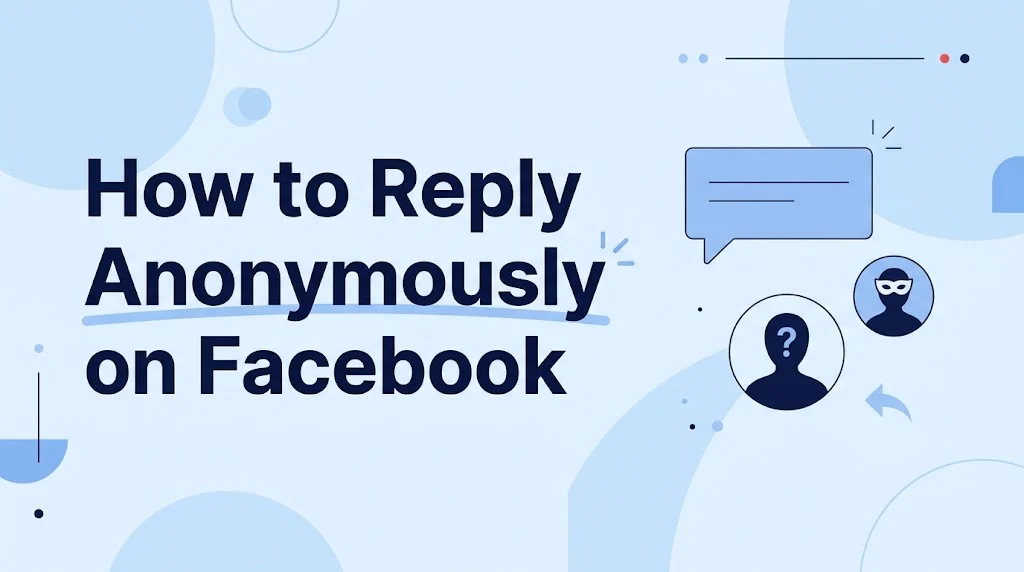
Ever wanted to reply to a Facebook post but did not want your name attached to it? Maybe it is a sensitive question in a group, an awkward situation, a personal experience, or simply something you would rather keep private. That is where learning how to reply anonymously on Facebook can come in handy.
Facebook does not offer a universal anonymous reply button for every post, profile, or comment. Anonymous participation is mainly available in certain Facebook groups when the group has the feature enabled.
The exact options can also vary depending on the group, account, and type of post. So before trying random tricks or third-party websites, it helps to know what Facebook actually allows. Here is a practical guide covering the built-in options, privacy considerations, and situations where anonymous replying may or may not work.
Use Facebook’s Anonymous Reply Option
- Look for the Anonymous participation option.
Use this when you are replying inside a Facebook group that supports anonymous participation.
Meaning: Facebook may let eligible group members interact without displaying their usual profile identity publicly. - Open the group post first.
Use this before looking for an anonymous commenting or replying option.
Meaning: Anonymous participation is generally connected to supported group activity rather than ordinary Facebook posts. - Tap the comment or reply field.
Use this when you want to respond to an eligible group post.
Meaning: Opening the reply area lets Facebook show whatever participation options are available to your account. - Check whether Anonymous reply appears.
Use this when the group supports anonymous interaction.
Meaning: The option appearing is the clearest indication that anonymous participation is available for that interaction. - Select the anonymous option when available.
Use this when you do not want your regular profile name displayed publicly.
Meaning: You are choosing Facebook’s built-in privacy feature rather than trying to hide your identity through a workaround. - Write your response after selecting anonymous participation.
Use this when the anonymous interface has been activated.
Meaning: Your response is submitted through the supported anonymous participation system. - Review the audience before posting.
Use this when discussing something personal or sensitive.
Meaning: Anonymous does not necessarily mean that nobody associated with Facebook can identify the account behind the activity. - Post only after checking the selected identity.
Use this if Facebook shows an anonymous identity indicator before submission.
Meaning: Checking first reduces the chance of accidentally posting under your normal profile. - Use the feature only where Facebook provides it.
Use this when you are unsure whether a group supports anonymous interaction.
Meaning: Facebook’s own option is safer and more reliable than unofficial methods. - Check the group rules first.
Use this before making a sensitive anonymous reply.
Meaning: Some groups have additional rules about anonymous posts and interactions. - Keep the reply relevant to the original post.
Use this when participating anonymously in a discussion.
Meaning: Anonymous participation should still follow normal community standards. - Avoid revealing personal details in the reply.
Use this when anonymity is important to you.
Meaning: Your own wording can accidentally identify you even when your profile name is hidden. - Check whether the anonymous identity is displayed publicly.
Use this before assuming your normal profile information is concealed.
Meaning: You should understand what other group members can actually see. - Use Facebook’s current interface rather than an old tutorial.
Use this when instructions you found online look different from your app.
Meaning: Facebook frequently changes its interface and feature availability. - Remember that anonymous participation is feature-dependent.
Use this when the option is missing from your account.
Meaning: Not every Facebook post, group, or account necessarily has access to anonymous replies.
When Anonymous Replies Are Available
- Facebook groups are the main place to look.
Use this when you are trying to reply anonymously to a group discussion.
Meaning: Anonymous participation is primarily associated with supported group features. - Check whether the group has anonymous participation enabled.
Use this when the anonymous option does not immediately appear.
Meaning: Group-level availability can affect whether you can use the feature. - Look at the post type.
Use this when one group post allows anonymous interaction but another does not.
Meaning: Feature availability can vary by the type of interaction. - Check your Facebook app version.
Use this when your interface does not match current instructions.
Meaning: Updating Facebook can ensure you are using the latest available interface. - Try the Facebook app and website separately.
Use this when an option seems unavailable in one interface.
Meaning: Facebook features can sometimes appear differently across platforms. - Check whether your account has access to the feature.
Use this when other members can participate anonymously but you cannot.
Meaning: Feature availability can depend on account or platform circumstances. - Read the group’s anonymous participation information.
Use this when Facebook displays an explanation before posting.
Meaning: The notice can tell you what information is visible to others. - Do not assume every group supports it.
Use this when you are looking for an anonymous reply button.
Meaning: Anonymous interaction is not a universal Facebook commenting feature. - Do not assume every comment supports anonymous replies.
Use this when you are replying to a particular discussion.
Meaning: Availability may depend on the specific group and interaction. - Ask a group administrator if the feature is unclear.
Use this when you cannot determine why the option is missing.
Meaning: Administrators may know whether anonymous participation is enabled for their community. - Check the post’s available participation choices.
Use this when Facebook provides several identity options.
Meaning: The available choices tell you how you can participate in that discussion. - Use the official Facebook interface.
Use this when privacy matters.
Meaning: Built-in Facebook controls are preferable to websites claiming they can make Facebook comments anonymous. - Avoid third-party anonymous-comment services.
Use this when a website promises to hide your Facebook identity.
Meaning: Giving another service access to your account can create unnecessary privacy and security risks. - Treat anonymous participation as conditional.
Use this when planning to make a sensitive response.
Meaning: The feature may not be available in every Facebook environment. - Confirm before submitting.
Use this whenever the identity attached to your response matters.
Meaning: A final check can prevent an unintended public post from your regular profile.
When You Cannot Reply Anonymously
- Regular public posts usually do not offer anonymous replies.
Use this when you are trying to hide your name under an ordinary Facebook post.
Meaning: Facebook’s anonymous group feature should not be confused with universal anonymous commenting. - You cannot simply add an anonymous mode to any comment.
Use this when the reply box shows only your normal profile.
Meaning: There is no general setting that turns every Facebook comment into an anonymous one. - A personal profile is different from a supported group.
Use this when comparing Facebook profile posts with group discussions.
Meaning: Group privacy features do not automatically apply to personal profiles. - A Facebook Page may work differently.
Use this when commenting or replying as a Page.
Meaning: Page identities and personal identities operate differently on Facebook. - A missing option cannot usually be forced on.
Use this when tutorials suggest hidden settings.
Meaning: If Facebook does not provide the feature in that context, changing ordinary comment settings will not necessarily create it. - Do not rely on changing your profile name.
Use this when someone suggests modifying your account to appear anonymous.
Meaning: Changing profile information is not the same as using Facebook’s anonymous participation feature. - Do not create misleading accounts to imitate anonymity.
Use this when considering another profile as a workaround.
Meaning: Additional accounts can create policy, authenticity, and security concerns. - Do not use someone else’s account.
Use this when trying to hide your identity in a discussion.
Meaning: Borrowing another person’s identity creates a separate privacy and trust problem. - Do not trust anonymous-comment generators.
Use this when a website claims it can post anonymously to Facebook.
Meaning: Facebook interaction should be handled through Facebook’s own systems. - Do not share your login information with an anonymity service.
Use this when a website asks for your Facebook password.
Meaning: Your credentials should remain private. - Check whether you are replying to a group post or public post.
Use this when the interface looks different from what a tutorial shows.
Meaning: The location of the conversation can determine which privacy options exist. - Do not assume deleting the reply makes it anonymous.
Use this when you have already posted publicly.
Meaning: Deleting content later does not change how it was originally posted or viewed. - Do not assume a pseudonym guarantees privacy.
Use this when considering a different profile name.
Meaning: Other information can still reveal who is behind an account. - Use a normal reply if anonymity is unavailable.
Use this when the built-in option is not provided.
Meaning: It is better to understand Facebook’s limits than to rely on questionable workarounds. - Consider not posting sensitive information at all.
Use this when the topic could expose you even without your name.
Meaning: True privacy sometimes means keeping identifying information out of the discussion entirely.
Privacy-Friendly Replies
- I would prefer to keep this anonymous, but I wanted to share my experience.
Use this when contributing personal information to a sensitive discussion.
Meaning: You are politely explaining your preference for privacy. - Sharing this anonymously because it is a personal matter.
Use this when discussing something you do not want connected publicly to your profile.
Meaning: You are setting a clear privacy boundary. - I hope this helps someone going through the same thing.
Use this when sharing a personal experience anonymously.
Meaning: You are focusing on helping others rather than identifying yourself. - Posting anonymously because I am not comfortable sharing my name.
Use this when the subject feels particularly private.
Meaning: You are directly communicating your reason for using anonymous participation. - Keeping my identity private, but I wanted to offer another perspective.
Use this when contributing to a debate or discussion.
Meaning: You want your viewpoint heard without publicly attaching your identity. - I have been through something similar and wanted to share what helped me.
Use this when offering supportive advice anonymously.
Meaning: You are using personal experience to help someone else. - Sharing this without attaching my name for personal reasons.
Use this when you need a simple privacy explanation.
Meaning: You are setting a boundary without revealing unnecessary details. - I am keeping this anonymous, but I genuinely hope this advice helps.
Use this when responding to someone asking for guidance.
Meaning: You are prioritizing helpfulness while protecting your privacy. - I cannot share details about myself, but here is what I learned.
Use this when personal details could identify you.
Meaning: You are offering useful information while limiting identifying information. - Anonymous here, but sending you support.
Use this for a supportive response to a difficult post.
Meaning: You are showing empathy without revealing your identity. - I wanted to say this without making it about me.
Use this when responding to someone’s experience.
Meaning: You are keeping the focus on the original poster. - Keeping my name private, but I hope this perspective helps.
Use this when offering a different viewpoint.
Meaning: You are respectfully contributing while maintaining privacy. - I understand what you are going through more than you might think.
Use this when you have relevant personal experience.
Meaning: You are expressing empathy without disclosing your identity. - Sharing this anonymously because the situation is sensitive.
Use this for delicate subjects.
Meaning: You are giving a straightforward reason for maintaining privacy. - No name attached, but plenty of support behind this message.
Use this for an encouraging response.
Meaning: You are emphasizing emotional support rather than identity.
Funny Anonymous Replies
- Anonymous, but my opinion has entered the chat.
Use this when you want to add humor to a group discussion.
Meaning: You are joking about participating without your usual profile identity. - Name hidden, thoughts fully visible.
Use this for a playful anonymous comment.
Meaning: You are joking that anonymity does not stop you from sharing your opinion. - Anonymous mode: activated.
Use this for a lighthearted group conversation.
Meaning: You are playfully treating anonymous participation like a secret mode. - You may not know my name, but you will know my opinion.
Use this when making a confident but humorous point.
Meaning: You are emphasizing that your message matters even without your identity. - Mystery commenter has arrived.
Use this when entering a casual group discussion.
Meaning: You are turning anonymous participation into a playful entrance. - Identity: classified. Opinion: unlocked.
Use this when you want a dramatic internet-style joke.
Meaning: You are humorously separating your identity from your willingness to comment. - Anonymous today, dramatic tomorrow.
Use this with friends in a playful group.
Meaning: You are joking about keeping your identity hidden while still enjoying the conversation. - Who am I? Facebook knows. You do not.
Use this when the group understands the limits of anonymity.
Meaning: You are making a playful reference to platform-level visibility. - Secret identity, very public opinion.
Use this for a humorous response.
Meaning: You are joking about the contrast between anonymity and public participation. - Agent Anonymous reporting for duty.
Use this when joining a lighthearted conversation.
Meaning: You are playfully presenting yourself as a secret agent. - No name, no problem.
Use this for a short casual response.
Meaning: You are expressing confidence about participating privately. - The mystery account has spoken.
Use this after making a playful point.
Meaning: You are jokingly highlighting your anonymous status. - Anonymous but somehow still involved.
Use this when the discussion is getting interesting.
Meaning: You are humorously acknowledging your hidden identity. - Stealth mode, comment mode, both activated.
Use this for a playful group reply.
Meaning: You are treating anonymous commenting like a fun digital feature. - My identity took the day off.
Use this when you want a silly anonymous introduction.
Meaning: You are humorously saying you are participating without your usual identity.
Clever Anonymous Replies
- Privacy does not mean silence.
Use this when explaining why you chose anonymous participation.
Meaning: You are saying that protecting your identity should not prevent you from contributing. - Sometimes the message matters more than the name.
Use this for a thoughtful group discussion.
Meaning: You are emphasizing the content of your contribution rather than your identity. - A hidden name can still carry a useful perspective.
Use this when offering advice anonymously.
Meaning: You are asking readers to consider the idea itself. - Keeping my identity private, not my thoughts.
Use this when you want a concise but confident response.
Meaning: You are distinguishing personal privacy from having an opinion. - Anonymous does not mean careless.
Use this when discussing a sensitive topic responsibly.
Meaning: You are signaling that privacy and accountability can coexist. - The name is private; the intention is genuine.
Use this when offering sincere support.
Meaning: You want people to focus on the helpful purpose of your message. - Privacy is part of the conversation too.
Use this when explaining your choice to remain anonymous.
Meaning: You are highlighting the importance of personal boundaries online. - Sometimes distance makes honesty easier.
Use this when discussing a sensitive personal experience.
Meaning: You are explaining why anonymity can make honest participation more comfortable. - You do not need my name to consider my point.
Use this when contributing a different perspective.
Meaning: You are encouraging people to evaluate the argument rather than the person. - The identity is private, but the experience is real.
Use this when sharing something you personally experienced.
Meaning: You are affirming the authenticity of your story without identifying yourself. - A private identity can still offer public value.
Use this when sharing helpful information.
Meaning: You are emphasizing the usefulness of the contribution. - Not every honest thought needs a name attached.
Use this when privacy is particularly important.
Meaning: You are defending your choice to participate anonymously. - Read the message before judging the messenger.
Use this when someone focuses too much on anonymity.
Meaning: You are encouraging people to consider the substance of the response. - Anonymous by choice, respectful by default.
Use this when you want to set a mature tone.
Meaning: You are making it clear that anonymity does not justify disrespect. - The username is hidden; the responsibility remains.
Use this for a serious conversation about online behavior.
Meaning: You are acknowledging that anonymous participation should still be responsible.
Sarcastic Anonymous Replies
- My name is apparently on vacation.
Use this when joking about your anonymous identity.
Meaning: You are playfully explaining why your normal profile name is not visible. - Guess my identity, but make it respectful.
Use this when someone keeps asking who you are.
Meaning: You are humorously asking them to respect your privacy. - The mystery continues.
Use this after someone comments on your anonymous status.
Meaning: You are playfully refusing to reveal your identity. - Sorry, the identity department is closed today.
Use this with friends who are jokingly curious.
Meaning: You are turning a privacy boundary into humor. - My profile said, “Not today.”
Use this for a casual anonymous interaction.
Meaning: You are joking that your identity is intentionally staying out of the discussion. - Name unavailable, opinion unfortunately available.
Use this for a sarcastic comment.
Meaning: You are joking that hiding your identity did not stop you from commenting. - I would tell you who I am, but where is the fun in that?
Use this when the conversation is playful.
Meaning: You are treating your anonymity as part of the joke. - The identity reveal has been postponed indefinitely.
Use this when someone repeatedly asks your name.
Meaning: You are humorously making it clear that you are not revealing it. - Anonymous, because apparently mystery is my brand now.
Use this in a lighthearted group.
Meaning: You are making fun of your own anonymous status. - No spoilers about the commenter.
Use this when someone asks who posted the message.
Meaning: You are playfully comparing your identity to a secret in a show. - The name is classified information.
Use this for a dramatic joke.
Meaning: You are humorously presenting your identity as confidential. - You get the comment, not the biography.
Use this when someone wants unnecessary personal details.
Meaning: You are setting a privacy boundary with sarcasm. - Anonymous today because my oversharing era is over.
Use this when joking with people online.
Meaning: You are humorously saying you are choosing greater privacy. - My identity is none of the comment section’s business.
Use this when someone becomes intrusive.
Meaning: You are firmly defending your privacy. - Mystery solved: I still prefer not to say.
Use this when people keep trying to identify you.
Meaning: You are using humor to reinforce your decision to stay anonymous.
Supportive Anonymous Replies
- You are not alone in this.
Use this when responding anonymously to someone facing a difficult situation.
Meaning: You are offering reassurance and emotional support. - I hope things get easier for you soon.
Use this for a person sharing a stressful experience.
Meaning: You are expressing compassion without making the reply about yourself. - Sending you strength and support.
Use this when the original post is emotional or difficult.
Meaning: You are offering encouragement from a distance. - I have been in a similar situation, and I understand.
Use this when your own experience could provide comfort.
Meaning: You are showing empathy through shared experience. - Please be kind to yourself through this.
Use this when someone is being hard on themselves.
Meaning: You are encouraging self-compassion. - I hope you find the support you need.
Use this when someone appears overwhelmed.
Meaning: You are encouraging them to seek helpful people or resources. - Things may feel heavy now, but you do not have to handle everything alone.
Use this for a serious personal post.
Meaning: You are encouraging connection and support. - Thank you for being brave enough to share this.
Use this when someone posts about a difficult experience.
Meaning: You are recognizing their courage. - Your experience matters, even if people do not understand it.
Use this when someone feels dismissed.
Meaning: You are validating the importance of their perspective. - I genuinely hope something good finds you soon.
Use this when you want a gentle anonymous message.
Meaning: You are expressing sincere hope for better circumstances. - Take things one day at a time.
Use this when someone is overwhelmed by a difficult situation.
Meaning: You are encouraging patience and manageable steps. - You deserve kindness while figuring this out.
Use this when someone is struggling with self-doubt.
Meaning: You are reminding them to treat themselves gently. - Keep going, even if progress feels slow.
Use this when encouraging someone through a challenging period.
Meaning: You are offering motivation without pretending everything is easy. - I am rooting for you from the anonymous corner.
Use this when you want to add a little warmth and humor.
Meaning: You are combining encouragement with your anonymous status. - Whatever happens, I hope you remember that you matter.
Use this for a deeply supportive response.
Meaning: You are offering reassurance and emotional encouragement.
Casual Anonymous Replies
- Just dropping my two cents anonymously.
Use this when sharing a casual opinion.
Meaning: You are presenting your viewpoint without attaching your usual profile. - Anonymous here, but I agree.
Use this when supporting someone’s point.
Meaning: You are agreeing while maintaining privacy. - I had to comment on this one.
Use this when a post strongly catches your attention.
Meaning: You are saying the topic was interesting enough to make you participate. - Adding this from the mystery account.
Use this in a relaxed group conversation.
Meaning: You are making your anonymous participation playful. - I have thoughts, apparently.
Use this for a humorous casual response.
Meaning: You are lightly introducing your opinion. - Could not scroll past this without replying.
Use this when a post particularly resonates with you.
Meaning: You are explaining why you decided to participate. - Anonymous, but definitely invested in this conversation.
Use this when the discussion is interesting.
Meaning: You are showing engagement while keeping your identity private. - Here is my completely unsolicited opinion.
Use this when adding a casual perspective.
Meaning: You are humorously acknowledging that nobody specifically asked for your opinion. - I will keep my name private and my comment short.
Use this when you want to avoid drawing attention.
Meaning: You are communicating a preference for privacy and brevity. - Just sharing what worked for me.
Use this when offering practical advice anonymously.
Meaning: You are sharing personal experience without identifying yourself. - This needed a response.
Use this when a post strongly catches your attention.
Meaning: You are saying the subject motivated you to participate. - Adding a little perspective from the shadows.
Use this when you want a playful anonymous introduction.
Meaning: You are humorously describing your hidden profile identity. - I agree with this more than I expected to.
Use this when you unexpectedly connect with a post.
Meaning: You are expressing genuine agreement in a relaxed way. - Not revealing my name, but I had to say this.
Use this for a casual anonymous opinion.
Meaning: You are explaining why privacy matters while still participating. - Okay, anonymous commenter signing off.
Use this when ending a casual contribution.
Meaning: You are giving the response a playful closing.
Confident Anonymous Replies
- I know what I experienced, and that is enough for me.
Use this when someone questions your anonymous personal story.
Meaning: You are confidently standing by your experience without revealing who you are. - You do not need my name to hear my point.
Use this when someone focuses on your identity instead of your argument.
Meaning: You are redirecting attention toward the substance of your response. - I am comfortable keeping my identity private.
Use this when someone pressures you to reveal yourself.
Meaning: You are clearly asserting your privacy boundary. - Anonymous does not make my experience less real.
Use this when discussing something personal.
Meaning: You are confidently separating your identity from the validity of your experience. - I said what I needed to say.
Use this when you want to end a debate.
Meaning: You are confidently closing the conversation. - My name is private, my position is clear.
Use this when making a strong but respectful point.
Meaning: You are emphasizing that anonymity does not weaken your viewpoint. - Privacy is a choice, not an apology.
Use this when someone criticizes your anonymous participation.
Meaning: You are firmly defending your decision to remain private. - I am here to contribute, not introduce myself.
Use this when people ask unnecessary questions about your identity.
Meaning: You are setting a direct boundary. - Judge the idea, not the profile.
Use this when the discussion becomes focused on identity.
Meaning: You are asking others to evaluate the content of your message. - I can respect the conversation without revealing my identity.
Use this when discussing a sensitive topic.
Meaning: You are asserting that privacy and respectful participation can coexist. - My identity is not required for this point to matter.
Use this when someone dismisses an anonymous comment.
Meaning: You are defending the value of your contribution. - I chose privacy, not silence.
Use this when explaining why you commented anonymously.
Meaning: You are confidently stating your reason for participating. - No name needed for a thoughtful opinion.
Use this for a calm but assertive response.
Meaning: You are emphasizing substance over identity. - I will keep my identity private and my response respectful.
Use this when the conversation becomes tense.
Meaning: You are establishing a clear boundary while maintaining civility. - That is all I am comfortable sharing.
Use this when someone asks for identifying details.
Meaning: You are firmly ending further questions about your identity.
Emotional Anonymous Replies
- Some things are easier to say when your name is not attached.
Use this when explaining why you chose anonymity.
Meaning: You are acknowledging that privacy can make vulnerable communication easier. - I needed a safe space to say this.
Use this when sharing a deeply personal experience.
Meaning: You are explaining that anonymity provides emotional comfort. - I hope someone reading this feels a little less alone.
Use this when sharing a difficult personal story.
Meaning: You want your experience to provide comfort to others. - I cannot share who I am, but I can share what I learned.
Use this when offering lessons from a personal situation.
Meaning: You are protecting your identity while making your experience useful. - There is a real person behind this anonymous message.
Use this when discussing something emotionally important.
Meaning: You are reminding readers that anonymous comments can still come from genuine experiences. - This is difficult to say, even anonymously.
Use this before sharing something particularly vulnerable.
Meaning: You are signaling the emotional weight of your message. - I am choosing privacy because this matters deeply to me.
Use this for a sensitive discussion.
Meaning: You are setting a personal boundary around an important subject. - Maybe someone else needs to hear this too.
Use this when sharing a lesson from your experience.
Meaning: You hope your words can help someone in a similar situation. - I wish I had heard this when I was going through it.
Use this when giving advice based on past experience.
Meaning: You are trying to provide the support you once needed. - Keeping my identity private, but sharing this with an open heart.
Use this for an emotional contribution.
Meaning: You are balancing privacy with sincere vulnerability. - I may be anonymous, but this feeling is real.
Use this when expressing an emotional experience.
Meaning: You are emphasizing authenticity despite hidden identity. - I hope these words reach someone who needs them.
Use this when offering encouragement.
Meaning: You are focusing on helping readers rather than identifying yourself. - Sometimes protecting yourself means choosing privacy.
Use this when explaining anonymous participation.
Meaning: You are presenting anonymity as a personal boundary. - I am sharing this because silence was getting too heavy.
Use this for a deeply personal group discussion.
Meaning: You are explaining that expressing yourself feels necessary. - No name attached, but a lot of truth behind these words.
Use this when sharing an honest personal perspective.
Meaning: You are emphasizing sincerity while protecting your identity.
Smart Privacy Tips Before Replying
- Do not include your full name in the comment.
Use this when anonymity is important.
Meaning: Your own text should not undo the privacy provided by the feature. - Avoid mentioning highly specific personal details.
Use this when discussing your experience anonymously.
Meaning: Unique details can make it easier for people who know you to identify you. - Be careful with workplace details.
Use this when posting about your job anonymously.
Meaning: A specific employer, department, location, or incident can reveal your identity. - Avoid sharing your exact location.
Use this when discussing local experiences.
Meaning: Precise location details can reduce practical anonymity. - Do not share private contact information.
Use this when someone asks to continue the discussion privately.
Meaning: Your phone number, email, or other contact details can directly identify you. - Remember that anonymity has limits.
Use this before posting something highly sensitive.
Meaning: Anonymous to other group members does not necessarily mean invisible to Facebook or administrators. - Do not assume screenshots are impossible.
Use this whenever you post something sensitive.
Meaning: Other people can potentially save or share what appears on their screen. - Think before posting anything you would regret seeing elsewhere.
Use this when discussing controversial or personal subjects.
Meaning: Online content can travel beyond its original audience. - Keep sensitive posts factual and respectful.
Use this when discussing another person or serious situation.
Meaning: Privacy should not become an excuse for harmful or reckless claims. - Avoid revealing details that only a few people know.
Use this when telling a personal story.
Meaning: Unique circumstances can unintentionally identify the author. - Check who can see the group content.
Use this before replying to a sensitive post.
Meaning: Understanding the audience helps you make a more informed privacy decision. - Do not share passwords or login codes.
Use this whenever a service claims it can provide anonymity.
Meaning: Legitimate anonymity does not require handing your credentials to strangers. - Use Facebook’s privacy controls instead of unofficial tricks.
Use this when you want more control over your participation.
Meaning: Built-in controls reduce the need to trust unknown third-party services. - Remember that admins may have additional visibility.
Use this when participating anonymously in a group.
Meaning: Anonymous participation for ordinary members does not necessarily mean complete anonymity from platform or group systems. - Pause before sending.
Use this for especially sensitive responses.
Meaning: A quick review can catch identifying information before it becomes public.
FAQs
Can I reply anonymously to any Facebook post?
No. Facebook does not provide a universal anonymous reply option for every post. Anonymous participation is generally associated with eligible Facebook groups and depends on the feature being available.
How do I reply anonymously on Facebook?
If the relevant Facebook group supports anonymous participation, look for the anonymous option when composing your reply and select it before posting.
Why can’t I see the anonymous reply option?
The group, post, account, or platform you are using may not support the feature. Facebook’s available options can vary.
Can Facebook admins see who posted anonymously?
Anonymous participation should not be treated as complete anonymity from Facebook or group administration systems.
Can I reply anonymously from my personal profile?
Facebook does not generally provide a universal anonymous commenting mode for ordinary personal-profile posts.
Conclusion
Knowing how to reply anonymously on Facebook is useful when you want to participate in a sensitive conversation without publicly attaching your regular profile identity. The key is understanding that Facebook’s anonymous participation feature is not available everywhere. When it appears in an eligible group, use the built-in option and review what information Facebook says will be visible before posting.
Most importantly, anonymity should not replace good judgment. Avoid personal details that could identify you, respect group rules, and remember that screenshots can travel. Whether you are sharing advice, supporting someone, or simply adding your two cents, choose the option that fits your privacy needs.
Discover More Related Articles:

Richard Scott is an experienced author dedicated to creating compelling and well-researched content for online audiences. As a contributor to Responary.com, he enjoys sharing knowledge through clear, engaging, and informative articles that connect with readers worldwide.