Quick Answer
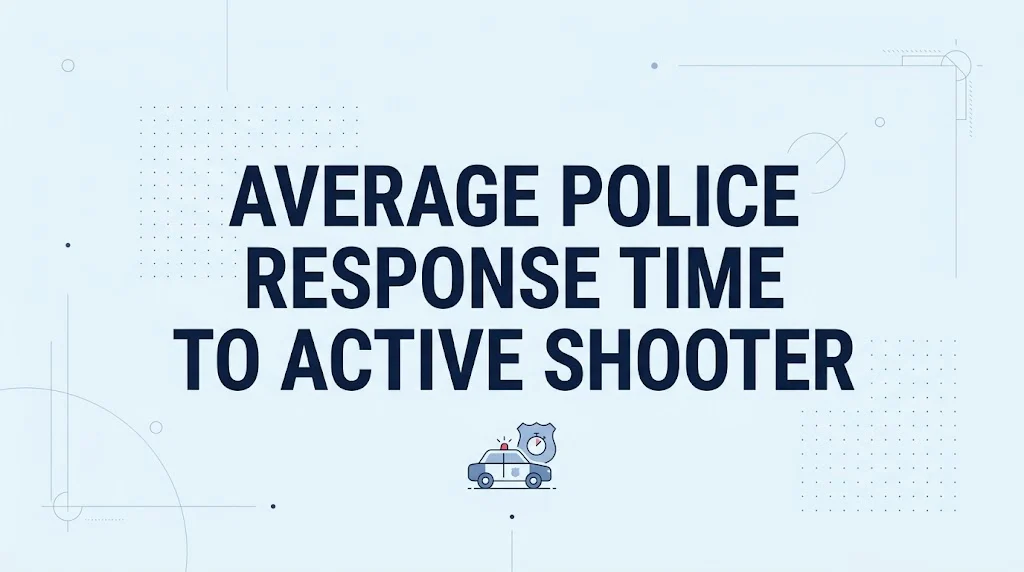
The FBI has reported a median police response time of about 3 minutes in 51 active shooter cases where response-time data were available. Median means half of those recorded responses were faster and half were slower, so it should not be treated as a universal national average.
3-minute median response, police arrival time, active shooter response, emergency law enforcement response, first officer arrival
When an active shooter emergency happens, every minute matters, which naturally leads to one important question: how quickly do police usually arrive? The answer is more complicated than a single stopwatch number. The FBI’s historical analysis found a median response time of three minutes among 51 cases with available data, but response times can vary substantially depending on location, distance, staffing, dispatch information, traffic, and other circumstances.
It is also important to distinguish between police receiving a call, the first officer arriving, and the threat being stopped. Those are different points in the timeline. More recent FBI reporting continues to show that active shooter incidents can develop extremely quickly. In 2025, the FBI identified 34 active shooter incidents in the United States, while its 2024 report identified 24.
What Is the Typical Police Response Time?
- About 3 minutes was the historical median.
Use this figure when discussing the FBI’s documented response-time research rather than presenting it as a guaranteed average.
Meaning: A median of three minutes means the middle recorded response was three minutes. - The data came from 51 cases.
Use this clarification whenever citing the three-minute figure.
Meaning: The statistic was based only on incidents where response-time information was available. - Median and average are not the same thing.
Use this distinction when explaining the statistic to readers.
Meaning: A median identifies the middle value, while an average is calculated by adding values and dividing by the number of observations. - Response times vary by location.
Use this when explaining why there is no single response time for every community.
Meaning: Distance, geography, staffing, and local emergency systems can affect arrival times. - Urban and rural environments can differ considerably.
Use this when discussing geographic differences.
Meaning: Agencies covering large or remote areas may face longer travel distances. - Dispatch information can affect the response.
Use this when explaining what happens after an emergency call.
Meaning: Officers need information about the location and nature of an emergency to respond appropriately. - The first officer’s arrival is not the same as the end of the incident.
Use this when readers confuse arrival with resolution.
Meaning: Police arrival and stopping the threat are separate events. - Some incidents end before police arrive.
Use this when explaining why response time alone cannot describe an entire incident.
Meaning: An active shooter event can change or end before officers reach the scene. - Some incidents remain underway when officers arrive.
Use this when discussing the urgency of rapid response.
Meaning: Officers may arrive while the emergency is still developing. - Historical FBI research found rapid police responses despite severe outcomes.
Use this when explaining why response time is only one factor.
Meaning: Fast arrival does not automatically prevent casualties. - There is no guaranteed national response time.
Use this when someone asks for a precise universal number.
Meaning: Actual response depends on circumstances surrounding each emergency. - Three minutes should not be treated as a promise.
Use this when presenting the statistic responsibly.
Meaning: Historical median data cannot predict the response to an individual emergency. - The FBI’s research covers specific documented incidents.
Use this when discussing the source of the statistic.
Meaning: The figure comes from recorded cases rather than every emergency call nationwide. - Response-time data were unavailable for many cases in the historical study.
Use this important limitation alongside the three-minute figure.
Meaning: The available cases should not automatically be assumed to represent every active shooter incident. - The safest assumption is that help may not be immediate.
Use this when discussing emergency preparedness.
Meaning: People should know basic emergency options instead of depending on an exact arrival time.
Why Police Response Time Matters
- Active shooter incidents can develop very quickly.
Use this when explaining why response speed receives so much attention.
Meaning: Events can change significantly within a short period. - Minutes can matter during an ongoing emergency.
Use this in discussions about emergency preparedness.
Meaning: Conditions may change before additional responders arrive. - Police response is only one part of emergency response.
Use this when discussing the broader emergency system.
Meaning: Dispatchers, police, fire services, EMS, and other responders can all have different roles. - The first officers may prioritize stopping the ongoing threat.
Use this when explaining why arriving officers may not immediately treat injured people.
Meaning: Immediate response priorities can differ from later medical rescue operations. - Additional responders may follow the first officers.
Use this when discussing emergency coordination.
Meaning: The response can expand after the initial law enforcement arrival. - Arrival time does not measure the entire emergency response.
Use this when comparing different incidents.
Meaning: Police arrival is only one milestone in a larger response. - Early information can be incomplete.
Use this when explaining why emergency responses can evolve.
Meaning: Dispatchers and officers may initially have limited information. - Circumstances can change after a call is placed.
Use this when explaining dynamic emergencies.
Meaning: New information can alter how responders approach the situation. - Multiple agencies may become involved.
Use this when explaining complex incidents.
Meaning: Large emergencies can require coordinated resources. - Medical response is also critical.
Use this when discussing casualty response.
Meaning: Emergency medical care is an important part of reducing harm after injuries. - Preparedness can complement emergency response.
Use this when discussing public safety education.
Meaning: People can benefit from knowing what to do while professional help is responding. - Response speed cannot eliminate every risk.
Use this when interpreting historical statistics.
Meaning: Fast arrival is important but does not guarantee a particular outcome. - Incident circumstances influence outcomes.
Use this when discussing why two emergencies can unfold differently.
Meaning: Location, timing, information, and behavior can vary from one event to another. - The first few minutes can be especially important.
Use this when explaining why emergency preparedness matters.
Meaning: People may need to make safety decisions before additional help arrives. - A response-time statistic should always include context.
Use this in articles, reports, or educational content.
Meaning: A number without its sample size and limitations can be misleading.
How Police Receive an Active Shooter Call
- Emergency calls generally begin the response process.
Use this when explaining the basic timeline.
Meaning: Information received by emergency communications helps initiate the response. - Dispatchers collect critical information.
Use this when describing what happens during an emergency call.
Meaning: Location and other available details help responders understand the situation. - The location must be identified as accurately as possible.
Use this in general emergency preparedness information.
Meaning: Responders need to know where assistance is required. - Call information can develop over time.
Use this when explaining why initial reports may change.
Meaning: Additional callers or updated information can provide a clearer picture. - Multiple callers may report the same emergency.
Use this when discussing large public incidents.
Meaning: Communications centers can receive several reports about one event. - Dispatch information is passed to responding officers.
Use this when explaining the connection between callers and police.
Meaning: Officers use available information to understand the reported emergency. - Officers may receive updates while traveling.
Use this when explaining how response information can evolve.
Meaning: New reports can change the information available to responders. - The initial report may not contain every detail.
Use this when explaining uncertainty during the first moments.
Meaning: Emergency situations are often reported while they are still unfolding. - Location accuracy can be especially important.
Use this when discussing emergency communication.
Meaning: Clear location information helps responders reach the correct area. - The response begins before an officer reaches the scene.
Use this when explaining the emergency timeline.
Meaning: Dispatch and communication activities occur during the initial response. - Police departments use established emergency procedures.
Use this when discussing institutional preparedness.
Meaning: Agencies train and plan for high-risk incidents. - Response plans differ among agencies.
Use this when comparing jurisdictions.
Meaning: Staffing, geography, equipment, and local policies vary. - Information quality can affect situational awareness.
Use this when discussing emergency communications.
Meaning: Better information can help responders understand what is happening. - The first reported details may be incomplete or uncertain.
Use this when explaining why situations can evolve quickly.
Meaning: Early emergency information should not always be assumed to be complete. - Emergency response is a coordinated process.
Use this as a concise summary of the dispatch stage.
Meaning: Call takers, dispatchers, officers, and other responders can contribute to the response.
Factors That Affect Police Response Time
- Distance matters.
Use this when explaining why nearby and remote incidents can have different response times.
Meaning: Officers farther away generally have a longer travel distance. - Traffic can affect travel.
Use this when discussing city response conditions.
Meaning: Road congestion can influence how quickly responders reach a location. - Geography can affect access.
Use this for rural, mountainous, or otherwise difficult-to-reach locations.
Meaning: Physical surroundings can influence travel and access. - Agency size can matter.
Use this when comparing large and small departments.
Meaning: Staffing levels and patrol coverage differ among agencies. - Time of day can affect available resources.
Use this when explaining variations in response conditions.
Meaning: Staffing and call volume can change throughout the day. - Call volume can affect resource availability.
Use this when discussing busy emergency systems.
Meaning: Other simultaneous emergencies can affect which resources are immediately available. - The incident location matters.
Use this when comparing different environments.
Meaning: Schools, businesses, public spaces, and rural areas can present different response conditions. - Information about the emergency matters.
Use this when discussing dispatch.
Meaning: Responders may receive different information depending on what callers report. - Multiple responding agencies can change the response structure.
Use this for complex emergencies.
Meaning: Larger incidents may require coordination across jurisdictions. - Weather can affect travel conditions.
Use this when discussing environmental factors.
Meaning: Poor weather can make transportation and access more difficult. - Road conditions can influence arrival.
Use this when explaining travel variability.
Meaning: Road closures or difficult conditions can add travel challenges. - The size of the jurisdiction matters.
Use this when comparing response coverage.
Meaning: Larger jurisdictions may have greater distances between officers and incident locations. - Specialized resources may take additional time to arrive.
Use this when distinguishing first response from broader response.
Meaning: Not every resource is necessarily stationed at the closest location. - Response times can vary from one incident to another.
Use this when explaining why a single number is insufficient.
Meaning: Active shooter incidents occur under very different circumstances. - A historical median does not predict an individual event.
Use this as a final caution about interpreting the data.
Meaning: Statistics describe groups of incidents rather than guaranteeing what happens next.
Police Arrival Versus Threat Resolution
- Police arrival and threat resolution are different measurements.
Use this when explaining active shooter statistics.
Meaning: An officer can arrive while the emergency is still underway. - The first officer may not immediately have the entire picture.
Use this when explaining rapidly changing situations.
Meaning: Information can remain incomplete when officers first arrive. - Additional officers can arrive afterward.
Use this when discussing the continuing response.
Meaning: The initial arrival may be followed by additional law enforcement resources. - The incident can change after police arrive.
Use this when discussing why arrival does not equal resolution.
Meaning: The situation can continue to evolve. - Some incidents end before police arrival.
Use this when discussing historical active shooter data.
Meaning: Not every incident remains active until officers reach the scene. - Some incidents are still active when officers arrive.
Use this when explaining the importance of rapid response.
Meaning: Officers can encounter an ongoing emergency. - Police response can involve several stages.
Use this when describing the broader timeline.
Meaning: Arrival, threat assessment, additional response, and medical operations can occur at different times. - Emergency medical care can follow the initial law enforcement response.
Use this when explaining rescue operations.
Meaning: Medical teams may enter after immediate safety concerns are addressed. - The three-minute figure describes response time, not resolution time.
Use this whenever citing the FBI’s historical statistic.
Meaning: The number should not be interpreted as saying incidents were resolved within three minutes. - Incident outcomes depend on multiple factors.
Use this in educational explanations.
Meaning: Response time is only one part of what determines an outcome. - A rapid arrival does not guarantee that no one is injured.
Use this when interpreting historical data.
Meaning: Harm can occur before or during the response. - A delayed arrival does not necessarily describe poor police performance.
Use this when discussing response statistics carefully.
Meaning: Distance, information, geography, and other circumstances can influence timing. - Historical data should be interpreted in context.
Use this in research-based articles.
Meaning: Sample size, data availability, and incident differences matter. - Response-time statistics are useful but limited.
Use this as a balanced summary.
Meaning: They provide information without describing every aspect of an emergency. - The safest interpretation is that response times vary.
Use this as a concise takeaway.
Meaning: No single number applies to every active shooter emergency.
What the FBI Data Actually Shows
- The FBI identified 51 cases with response-time data in its historical research.
Use this when citing the three-minute median.
Meaning: The statistic came from a defined subset of documented incidents. - The median response time was three minutes.
Use this as the central historical statistic.
Meaning: The middle recorded response was three minutes. - The FBI described three minutes as fast by law enforcement standards.
Use this when providing context for the historical result.
Meaning: The documented median represented a relatively rapid police response. - The historical dataset does not represent every emergency call.
Use this when explaining limitations.
Meaning: The analysis covered documented active shooter cases meeting the study criteria. - Response-time information was missing for more than half of the identified cases in that study.
Use this important qualification when discussing representativeness.
Meaning: The three-minute statistic should be interpreted with caution. - The FBI’s active shooter definition concerns an individual actively engaged in killing or attempting to kill people in a populated area.
Use this when defining the population behind the statistics.
Meaning: The term has a specific definition in FBI reporting. - The FBI continues to publish annual active shooter reports.
Use this when discussing newer data.
Meaning: Active shooter statistics are updated through ongoing reporting. - The FBI identified 24 active shooter incidents in 2024.
Use this when providing the most recent annual figure available in the 2024 report.
Meaning: The FBI classified 24 U.S. shootings as active shooter incidents that year. - The FBI identified 34 active shooter incidents in 2025.
Use this when discussing the latest annual report currently available.
Meaning: The FBI’s 2025 report identified 34 incidents in the United States. - The 2025 figure was higher than the 2024 figure.
Use this when comparing those two annual FBI reports.
Meaning: The reported number increased from 24 in 2024 to 34 in 2025. - Annual incident counts do not establish response-time averages.
Use this when comparing different FBI statistics.
Meaning: The number of incidents and the time taken to respond measure different things. - The three-minute figure comes from older research.
Use this when presenting it alongside newer annual reports.
Meaning: It should not be described as a newly measured national response-time average. - Current annual FBI reports provide incident information but do not turn the historical three-minute median into a current universal benchmark.
Use this when writing an up-to-date article.
Meaning: New incident counts should not be confused with updated nationwide response-time data. - The strongest factual description is “three-minute median in 51 cases with available data.”
Use this when precision matters.
Meaning: This wording accurately preserves the study’s sample and statistic. - Statistics need their source and timeframe.
Use this in educational or research writing.
Meaning: Readers need context to understand what a number actually represents.
Why Average and Median Are Often Confused
- An average adds all values and divides by the number of values.
Use this when teaching the basic distinction.
Meaning: The arithmetic mean uses every recorded value in the calculation. - A median identifies the middle value after sorting the data.
Use this when explaining the FBI statistic.
Meaning: Half the observations fall below the median and half above it. - The FBI reported a median, not a national average.
Use this when correcting a common wording mistake.
Meaning: Three minutes should not automatically be labeled the average response time. - A median can be useful when response times vary widely.
Use this when explaining why researchers use medians.
Meaning: Extreme values have less influence on a median than on an arithmetic mean. - A single statistic cannot capture every community.
Use this when discussing national comparisons.
Meaning: Local conditions can produce very different response times. - Sample size matters.
Use this when interpreting the 51-case dataset.
Meaning: The number of observations affects how broadly a statistic can be generalized. - Missing data matters too.
Use this when explaining limitations.
Meaning: Unavailable response times can affect what researchers are able to conclude. - Historical statistics need dates.
Use this when presenting older research today.
Meaning: Readers should know when the underlying incidents occurred. - Current incident counts are not current response-time measurements.
Use this when comparing FBI publications.
Meaning: Newer incident reports do not automatically update an older response-time statistic. - A median is still useful even when it is not an average.
Use this when explaining why the three-minute figure matters.
Meaning: It gives readers a meaningful central point within the available response-time data. - The phrase “typical response” should be used carefully.
Use this when writing consumer-facing content.
Meaning: A historical median does not guarantee what happens in a particular jurisdiction. - Response-time statistics need methodological context.
Use this in research-focused content.
Meaning: Readers should understand how the cases were selected and measured. - National statistics can hide local variation.
Use this when discussing community preparedness.
Meaning: A nationwide statistic may differ substantially from a particular department’s performance. - The safest wording is precise wording.
Use this when editing an article.
Meaning: Calling the figure a median avoids overstating what the research found. - Numbers become more useful when their limitations are explained.
Use this as a concluding data-literacy point.
Meaning: Context helps readers interpret statistics responsibly.
What To Do While Waiting for Help
- Follow official emergency instructions.
Use this during an actual emergency when authorities provide directions.
Meaning: Official instructions are based on the circumstances known to responders. - If you are in immediate danger, prioritize getting to safety.
Use this as general emergency preparedness guidance.
Meaning: Personal safety comes before belongings or other nonessential concerns. - The FBI’s public guidance uses the options Run, Hide, and Fight.
Use this when summarizing official preparedness guidance.
Meaning: The framework provides options depending on the circumstances. - Run when a safe escape route is available.
Use this when discussing the FBI’s first option.
Meaning: Leaving danger can reduce exposure to an active threat. - Hide when escaping is not safely possible.
Use this when discussing the FBI’s second option.
Meaning: Getting out of sight and securing a location can provide protection. - Fight is described by the FBI as a last resort.
Use this when summarizing the official framework.
Meaning: It applies when someone faces an imminent threat and other options are unavailable. - Call emergency services when you are safe to do so.
Use this in general emergency preparedness information.
Meaning: Emergency dispatchers need information to send appropriate assistance. - Keep emergency communication concise.
Use this when discussing calls during dangerous situations.
Meaning: Clear information can help emergency personnel understand the situation. - Follow instructions from responding officers.
Use this when discussing what happens after police arrive.
Meaning: Officers may provide directions based on the developing situation. - Keep your hands visible when encountering responding officers.
Use this when summarizing FBI guidance.
Meaning: Visible hands can help officers distinguish people who may need assistance from potential threats. - Do not assume that the first police arrival means the emergency is completely over.
Use this when explaining why people should continue following instructions.
Meaning: Responders may still be securing the area. - Remain alert for official directions.
Use this when discussing evacuation or sheltering situations.
Meaning: Conditions can change during an emergency. - Avoid returning to an unsafe area without authorization.
Use this as general emergency guidance.
Meaning: The area may not yet be secure. - Emergency preparedness should happen before an emergency.
Use this in safety education.
Meaning: Familiarity with basic options is easier to develop before a crisis occurs. - For a real emergency, contact your local emergency services immediately.
Use this as the practical closing point for safety information.
Meaning: General statistics cannot replace real-time instructions from local responders.
FAQs
- Is 3 minutes the average police response time?
Use this when correcting the most common misconception. - Does every police department respond within 3 minutes?
Use this when someone treats the statistic as a guarantee. - Why can response times be longer?
Use this when discussing rural or difficult-to-access locations. - Does police arrival mean the shooter has been stopped?
Use this when clarifying the timeline. - Can an active shooter event end before police arrive?
Use this when discussing historical incidents.
Conclusion
The most commonly cited FBI figure is a three-minute median police response time in 51 historical active shooter cases where response-time data were available. That number is useful, but it should not be mistaken for a guaranteed national average or a prediction for any individual emergency.
Response times depend on many circumstances, including location, distance, staffing, traffic, available information, and the nature of the incident. Just as importantly, police arrival and threat resolution are not necessarily the same moment. For anyone researching this topic, the best approach is to use precise statistics, acknowledge their limitations, and rely on official emergency preparedness guidance for practical safety information.
The FBI’s public guidance recommends considering Run, Hide, or Fight based on the circumstances and following law enforcement instructions when responders arrive.
Discover More Related Articles:

Jennifer Wilson is an experienced writer and content creator with over 20 years of expertise in digital publishing, lifestyle, and informative content. Holding a degree in English Literature, she contributes to Responary.Com, where she shares engaging, well-researched articles that help readers stay informed and inspired.