Quick Answer
The best response to reviewers depends on whether you want to sound professional, grateful, confident, diplomatic, or firm. Try these: Thank you for your thoughtful feedback, We appreciate your valuable comments, Thank you for pointing this out, We have addressed your concern, We appreciate the suggestion
Getting a message from a reviewer can feel a little like opening an exam result you did not study for. Whether the feedback is positive, critical, detailed, or unexpectedly blunt, the right reply can keep things professional while showing that you value their time and perspective.
A reviewer leaves feedback, and suddenly you are staring at the screen wondering whether to say thank you, explain yourself, fix the issue, or simply pretend you never saw the notification. Sound familiar? Reviews show up everywhere, from academic papers and business proposals to products, services, apps, social media, and professional work.
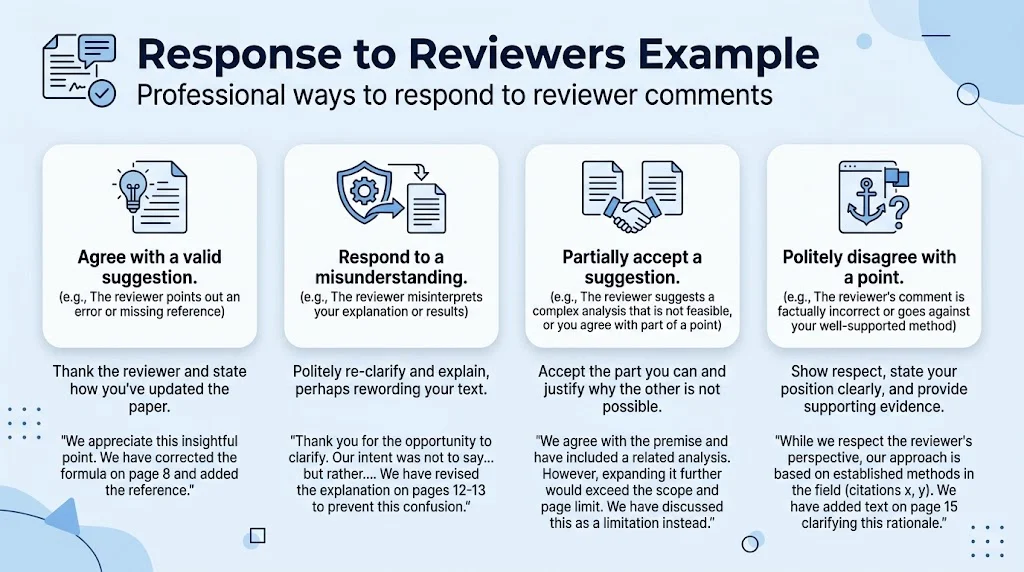
Knowing how to respond to reviewers matters because your reply can shape how people see your professionalism, confidence, and willingness to improve. A thoughtful answer does not mean agreeing with everything. Sometimes you need to accept a suggestion, sometimes you need to clarify your position, and sometimes you need to politely disagree.
The best response sounds natural, respectful, and specific. Whether you need a short professional reply or something more diplomatic, these ready-to-use examples make the process much easier.
Professional Responses
- Thank you for your thoughtful feedback.
Use this when a reviewer provides useful comments on your work.
Meaning: You are respectfully acknowledging their effort and perspective. - We appreciate your valuable comments and suggestions.
Use this for formal review situations where several points were raised.
Meaning: You are showing that you take the feedback seriously. - Thank you for taking the time to review our work.
Use this when you want to recognize the reviewer’s effort.
Meaning: You are expressing professional appreciation. - Thank you for bringing this issue to our attention.
Use this when the reviewer identifies something you had overlooked.
Meaning: You are acknowledging the concern without becoming defensive. - We appreciate the opportunity to clarify this point.
Use this when a reviewer misunderstands part of your work.
Meaning: You are opening the door to clarification in a respectful way. - Thank you for your careful consideration of our work.
Use this for a formal professional response.
Meaning: You are recognizing the reviewer’s attention to detail. - We have carefully considered your feedback.
Use this before explaining how you responded to their comments.
Meaning: You are showing that the feedback was reviewed thoughtfully. - Your comments have helped us improve the quality of our work.
Use this when feedback led to meaningful changes.
Meaning: You are highlighting the positive impact of their review. - We appreciate your detailed assessment.
Use this after receiving an extensive review.
Meaning: You are thanking them for providing a thorough evaluation. - Thank you for highlighting this important point.
Use this when the reviewer identifies a meaningful issue.
Meaning: You are recognizing the importance of their observation. - We are grateful for your constructive feedback.
Use this when the comments are critical but helpful.
Meaning: You are framing criticism as an opportunity for improvement. - We have taken your recommendation into consideration.
Use this when you want to acknowledge a suggestion before explaining your decision.
Meaning: You are showing that the recommendation was seriously evaluated. - Thank you for helping us strengthen this work.
Use this when the review resulted in useful improvements.
Meaning: You are crediting the reviewer for contributing to a better result. - We appreciate your careful review and helpful suggestions.
Use this as a professional opening or closing statement.
Meaning: You are combining gratitude with recognition of their input. - Thank you for your time, expertise, and valuable feedback.
Use this when you want a particularly polished professional response.
Meaning: You are expressing appreciation for both their effort and expertise.
Polite Responses
- Thank you for sharing your perspective.
Use this when you want to acknowledge an opinion respectfully.
Meaning: You are recognizing their viewpoint without automatically agreeing. - We appreciate you pointing this out.
Use this when a reviewer notices something important.
Meaning: You are responding positively to their observation. - Thank you for raising this concern.
Use this when the review contains a criticism that deserves attention.
Meaning: You are acknowledging the concern in a calm way. - That is a helpful suggestion, and we appreciate it.
Use this when the reviewer offers a practical improvement.
Meaning: You are showing openness to their recommendation. - We understand your concern and appreciate the opportunity to address it.
Use this when responding to a potentially sensitive criticism.
Meaning: You are validating the concern while preparing to explain your position. - Thank you for your honest feedback.
Use this when the review is direct but useful.
Meaning: You are showing maturity and openness. - We appreciate the clarification you have requested.
Use this when a reviewer asks for more explanation.
Meaning: You are treating their question as a reasonable request. - Thank you for noting this detail.
Use this when the reviewer catches a smaller issue.
Meaning: You are politely acknowledging their attention to detail. - We value your feedback and have reviewed the matter carefully.
Use this when you need to show that their comments received serious attention.
Meaning: You are communicating respect and consideration. - Your observation is appreciated.
Use this for a concise formal response.
Meaning: You are politely recognizing their point. - Thank you for giving us the opportunity to explain this further.
Use this when clarification is needed.
Meaning: You are turning a potentially difficult comment into a constructive discussion. - We appreciate your patience while we addressed this issue.
Use this when revisions or corrections took time.
Meaning: You are thanking them for allowing time to make improvements. - Thank you for helping us identify an area for improvement.
Use this when the reviewer points out a genuine weakness.
Meaning: You are responding positively to constructive criticism. - We are grateful for your thoughtful consideration.
Use this as a polished closing sentence.
Meaning: You are ending the response on a respectful note. - Thank you again for your valuable input.
Use this after addressing several reviewer comments.
Meaning: You are closing the exchange with appreciation.
Responses When You Agree
- We agree with this observation and have revised the section accordingly.
Use this when you fully accept the reviewer’s point.
Meaning: You are acknowledging the criticism and confirming action. - Thank you for this suggestion. We have incorporated it into the revised version.
Use this when a recommendation has been implemented.
Meaning: You are showing that their feedback directly influenced your revision. - We agree that this clarification was necessary.
Use this when your original explanation was unclear.
Meaning: You are accepting responsibility for improving clarity. - We appreciate this recommendation and have made the suggested changes.
Use this when you follow their proposed solution.
Meaning: You are confirming that the recommendation was useful. - You are correct, and we have corrected the issue.
Use this when the reviewer identifies an actual error.
Meaning: You are taking responsibility without unnecessary explanation. - We agree that additional detail would strengthen this section.
Use this when more information is needed.
Meaning: You are accepting the reviewer’s reasoning. - This is an excellent suggestion, and we have addressed it in the revision.
Use this when the reviewer offers a particularly helpful idea.
Meaning: You are expressing strong appreciation for their contribution. - We appreciate this important point and have revised our approach accordingly.
Use this when feedback changes part of your work.
Meaning: You are showing that the comment had a meaningful impact. - We agree with the reviewer and have expanded the explanation.
Use this when the reviewer asks for greater clarity.
Meaning: You are confirming both agreement and action. - Thank you for identifying this issue. It has now been corrected.
Use this for a straightforward error.
Meaning: You are acknowledging the mistake and confirming the fix. - We agree that this section required further clarification.
Use this when the original wording could cause confusion.
Meaning: You are accepting the need for improvement. - Your suggestion has strengthened the final version.
Use this after implementing their recommendation.
Meaning: You are giving credit for the useful feedback. - We appreciate the recommendation and have included the requested information.
Use this when additional content has been added.
Meaning: You are confirming that the request was fulfilled. - We agree with this concern and have taken steps to address it.
Use this when the issue requires more than a simple edit.
Meaning: You are demonstrating that the concern was taken seriously. - Thank you for this helpful recommendation. We have followed it in the revised version.
Use this when you want to clearly confirm compliance with a suggestion.
Meaning: You are respectfully confirming that their advice was adopted.
Responses When You Disagree
- Thank you for raising this point. After careful consideration, we respectfully disagree.
Use this when you need to reject a reviewer’s conclusion politely.
Meaning: You are disagreeing without becoming confrontational. - We appreciate the comment but believe our original approach remains appropriate.
Use this when you have strong reasons to retain your approach.
Meaning: You are respectfully defending your decision. - We understand the concern; however, our findings support a different interpretation.
Use this when evidence supports your position.
Meaning: You are explaining disagreement through reasoning rather than emotion. - Thank you for the suggestion. We considered it carefully but decided not to make this change.
Use this when a recommendation does not fit your work.
Meaning: You are showing that the decision was deliberate. - We respectfully maintain our original position for the following reasons.
Use this before presenting a clear explanation.
Meaning: You are confidently defending your position while remaining courteous. - We appreciate the reviewer’s perspective, although our analysis leads us to a different conclusion.
Use this when interpretation is the main disagreement.
Meaning: You are separating respect for the reviewer from your conclusion. - We considered this alternative but found that it was not consistent with our objectives.
Use this when a suggestion does not fit the purpose of your work.
Meaning: You are explaining why the recommendation was not adopted. - We understand the rationale behind this suggestion, but we have chosen to retain the current approach.
Use this when you want to acknowledge the logic behind a suggestion.
Meaning: You are disagreeing while demonstrating thoughtful consideration. - Thank you for highlighting this issue. We believe the available evidence supports our original interpretation.
Use this when evidence is central to your response.
Meaning: You are defending your position using evidence. - While we recognize the reviewer’s concern, we do not believe this change is necessary.
Use this for a minor recommendation you do not consider essential.
Meaning: You are respectfully declining the proposed change. - We appreciate the suggestion and have carefully evaluated its relevance to our work.
Use this before explaining why you disagree.
Meaning: You are emphasizing that the suggestion was not dismissed casually. - Our interpretation differs because of the following considerations.
Use this before providing supporting reasons.
Meaning: You are shifting the discussion toward evidence and reasoning. - We respectfully offer a different interpretation of this finding.
Use this when disagreement involves analysis.
Meaning: You are presenting an alternative without sounding defensive. - Although we appreciate the concern, our results do not support this conclusion.
Use this when the evidence points elsewhere.
Meaning: You are politely explaining why you cannot accept the conclusion. - We hope the additional explanation clarifies the reasoning behind our decision.
Use this after defending your approach.
Meaning: You are closing the disagreement in a constructive way.
Responses To Harsh Reviews
- Thank you for the direct feedback. We have carefully considered each concern.
Use this when a review is unusually critical.
Meaning: You are remaining composed instead of reacting emotionally. - We appreciate the concerns raised and have addressed the points that required revision.
Use this when the criticism identifies genuine weaknesses.
Meaning: You are demonstrating that useful criticism was acted upon. - Thank you for highlighting these areas for improvement.
Use this when the review is tough but contains useful information.
Meaning: You are reframing criticism as constructive input. - We understand the concerns and have made several changes in response.
Use this when substantial revisions were necessary.
Meaning: You are showing that the criticism led to action. - We appreciate the reviewer’s candid assessment.
Use this when you want to acknowledge blunt feedback professionally.
Meaning: You are recognizing their honesty without endorsing every statement. - We have taken the criticism seriously and carefully reviewed the relevant sections.
Use this when the feedback challenges important parts of your work.
Meaning: You are demonstrating responsibility and attention. - Thank you for drawing attention to these weaknesses.
Use this when the criticism reveals genuine areas to improve.
Meaning: You are acknowledging the value of honest evaluation. - We recognize that this section could have been clearer.
Use this when the reviewer’s criticism is justified.
Meaning: You are accepting responsibility for a clarity problem. - We appreciate the opportunity to strengthen the work based on these comments.
Use this when revisions can improve the final result.
Meaning: You are responding positively despite difficult feedback. - Your concerns have prompted us to revisit this part of the work.
Use this when the criticism makes you reconsider an approach.
Meaning: You are showing that the feedback had a meaningful effect. - We acknowledge the limitation identified in the review.
Use this when the reviewer points out a genuine limitation.
Meaning: You are being transparent about a weakness. - We appreciate the reviewer’s careful attention to this issue.
Use this when the criticism is detailed and specific.
Meaning: You are maintaining a respectful tone despite harsh feedback. - We have responded to each concern in detail below.
Use this when preparing a point-by-point reply.
Meaning: You are signaling that every issue has been considered. - We respectfully address the concerns while providing additional context.
Use this when you need to explain your position.
Meaning: You are balancing professionalism with self-defense. - Thank you for challenging us to improve this work further.
Use this when criticism ultimately helps strengthen the result.
Meaning: You are turning a negative review into a positive learning opportunity.
Responses To Positive Reviews
- Thank you so much for your kind review.
Use this after receiving genuinely positive feedback.
Meaning: You are showing sincere appreciation. - We are delighted to hear that you enjoyed your experience.
Use this when responding to a positive customer review.
Meaning: You are expressing happiness about their satisfaction. - Your kind words mean a lot to us.
Use this when a reviewer gives a heartfelt compliment.
Meaning: You are making the response feel personal and appreciative. - Thank you for taking the time to share your experience.
Use this for a detailed positive review.
Meaning: You are recognizing the effort behind their feedback. - We truly appreciate your support.
Use this for loyal customers or returning reviewers.
Meaning: You are expressing gratitude for their continued support. - We are so glad our work met your expectations.
Use this when someone praises the quality of your work.
Meaning: You are acknowledging their satisfaction. - Thank you for the wonderful feedback.
Use this for a simple and friendly response.
Meaning: You are warmly acknowledging their positive opinion. - It is wonderful to know that you had such a positive experience.
Use this for a detailed customer review.
Meaning: You are showing genuine happiness about their experience. - We appreciate you sharing your experience with others.
Use this when a review may help future customers.
Meaning: You are thanking them for spreading the word. - Your feedback encourages us to keep doing our best.
Use this when you want to connect praise with future effort.
Meaning: You are showing that positive feedback motivates you. - Thank you for your continued trust and support.
Use this for a returning customer or long-term reviewer.
Meaning: You are recognizing an ongoing relationship. - We are grateful that you took the time to leave such a thoughtful review.
Use this after receiving detailed positive feedback.
Meaning: You are appreciating both their words and effort. - We are thrilled that you enjoyed the experience.
Use this for an enthusiastic but professional reply.
Meaning: You are matching the reviewer’s positive energy. - Thank you for recommending us. It truly means a lot.
Use this when the reviewer recommends your product or service.
Meaning: You are emphasizing the value of their endorsement. - We look forward to welcoming you again.
Use this for a customer who says they plan to return.
Meaning: You are warmly encouraging future interaction.
Responses To Negative Reviews
- Thank you for sharing your experience. We are sorry it did not meet your expectations.
Use this when responding to a disappointed customer.
Meaning: You are acknowledging their experience without becoming defensive. - We are sorry to hear about your experience and appreciate you bringing it to our attention.
Use this when a negative review identifies a service problem.
Meaning: You are showing empathy while opening the door to resolution. - We take your feedback seriously and would appreciate the opportunity to address the issue.
Use this when you want to move the conversation toward a solution.
Meaning: You are showing responsibility and willingness to help. - We understand your frustration and apologize for the inconvenience.
Use this when the customer experienced a genuine problem.
Meaning: You are recognizing their frustration and expressing regret. - Thank you for pointing this out. We are reviewing what happened.
Use this when you need time to investigate.
Meaning: You are acknowledging the issue without making premature claims. - We are disappointed that your experience fell short of expectations.
Use this for a professional public response.
Meaning: You are expressing regret while remaining measured. - We appreciate your honest feedback and will use it to improve.
Use this when criticism provides a clear lesson.
Meaning: You are turning a negative review into an improvement opportunity. - We would be happy to discuss this further and find a suitable resolution.
Use this when the issue needs private follow-up.
Meaning: You are inviting constructive problem-solving. - We apologize for the inconvenience caused.
Use this for a short formal response to a service complaint.
Meaning: You are directly acknowledging the inconvenience. - Your concerns are important to us, and we are looking into the matter.
Use this when an investigation is required.
Meaning: You are assuring the reviewer that their complaint is being considered. - Thank you for giving us the chance to improve.
Use this when the negative review identifies something you can fix.
Meaning: You are responding positively to criticism. - We regret that we did not provide the experience you expected.
Use this when expectations were not met.
Meaning: You are taking responsibility without arguing. - We appreciate your patience while we work through this concern.
Use this when a resolution requires time.
Meaning: You are asking for understanding during the resolution process. - We would like the opportunity to make this right.
Use this when you can offer a meaningful resolution.
Meaning: You are signaling a willingness to repair the relationship. - Thank you for helping us identify where we can do better.
Use this when the criticism reveals a service improvement opportunity.
Meaning: You are acknowledging the review constructively.
Clever Responses
- Feedback is useful when it gives us something better to work with, and we appreciate yours.
Use this when you want a thoughtful but confident response.
Meaning: You are showing that you value actionable feedback. - A different perspective often reveals what we miss ourselves.
Use this when a reviewer offers an unexpected observation.
Meaning: You are recognizing the value of outside perspective. - Thank you for asking the question we needed to answer more clearly.
Use this when a reviewer exposes a gap in your explanation.
Meaning: You are turning a criticism into an opportunity for clarity. - Your comment gave us a useful reason to revisit this section.
Use this when feedback prompts reconsideration.
Meaning: You are showing that the review encouraged deeper thought. - We appreciate the challenge and have responded with additional context.
Use this when a reviewer pushes you to justify your approach.
Meaning: You are treating the challenge as constructive. - The comment helped us see where our explanation could be stronger.
Use this when clarity was the problem.
Meaning: You are acknowledging the weakness without over-apologizing. - We considered the suggestion from both practical and strategic perspectives.
Use this when a recommendation requires careful evaluation.
Meaning: You are showing that your decision was thoughtful. - Your observation highlights an important distinction that we have now clarified.
Use this when the reviewer spots an ambiguity.
Meaning: You are explaining how their feedback improved precision. - We appreciate the opportunity to make the reasoning more transparent.
Use this when your original explanation was too brief.
Meaning: You are improving communication rather than simply defending yourself. - The review helped us separate the issue from the underlying assumption.
Use this when a reviewer challenges the basis of your argument.
Meaning: You are showing analytical maturity. - We believe the revised explanation makes our position clearer.
Use this after adding supporting information.
Meaning: You are confidently presenting the improvement. - Thank you for encouraging us to look at this from another angle.
Use this when the reviewer provides a fresh perspective.
Meaning: You are showing openness to alternative thinking. - We have addressed the comment while preserving the central approach.
Use this when you make changes without abandoning your main position.
Meaning: You are demonstrating flexibility and confidence. - Your feedback helped us identify a distinction that deserved more attention.
Use this when the review uncovers a subtle issue.
Meaning: You are crediting the reviewer for improving the depth of your work. - We appreciate the thoughtful challenge and hope our response provides sufficient clarity.
Use this as a polished closing after a detailed explanation.
Meaning: You are ending a disagreement on a constructive note.
Short And Simple Responses
- Thank you for the feedback.
Use this when you need a quick professional acknowledgment.
Meaning: You are showing appreciation without adding unnecessary detail. - We appreciate your comments.
Use this for a concise formal reply.
Meaning: You are acknowledging the reviewer’s input. - Thank you for pointing this out.
Use this when a reviewer identifies something useful.
Meaning: You are recognizing their observation. - We have addressed this concern.
Use this after making the requested change.
Meaning: You are confirming that action has been taken. - We appreciate the suggestion.
Use this when acknowledging a recommendation.
Meaning: You are showing openness to their idea. - Thank you for the clarification.
Use this when the reviewer provides additional context.
Meaning: You are acknowledging the helpful information. - We agree and have revised the section.
Use this when you accept the reviewer’s point and make a change.
Meaning: You are confirming both agreement and action. - We have carefully considered this comment.
Use this when you need to respond thoughtfully.
Meaning: You are showing that the point was not ignored. - Thank you for raising this issue.
Use this for a concern that needs acknowledgment.
Meaning: You are responding respectfully to criticism. - We have made the suggested changes.
Use this when the recommendation was implemented.
Meaning: You are confirming completion. - We respectfully disagree with this point.
Use this when you need a concise disagreement.
Meaning: You are defending your position while remaining courteous. - We have clarified this point in the revised version.
Use this after improving an explanation.
Meaning: You are confirming that clarity was improved. - We appreciate your careful review.
Use this as a professional closing.
Meaning: You are recognizing the reviewer’s effort. - Thank you for helping us improve this work.
Use this when feedback leads to meaningful improvements.
Meaning: You are expressing gratitude for constructive input. - We hope this response addresses your concern.
Use this after explaining your position or making revisions.
Meaning: You are respectfully inviting the reviewer to consider your response.
FAQs
What does a reviewer response mean?
It is a written reply that acknowledges, explains, accepts, or addresses comments made during a review process.
How should I respond to a critical reviewer?
Stay calm and professional. Acknowledge valid concerns, explain disagreements with evidence, and avoid defensive or emotional language.
Should I agree with every reviewer comment?
No. You can respectfully disagree when you have clear reasoning or evidence supporting your position.
How do I respond when I agree with the reviewer?
Thank them, briefly acknowledge the point, and explain what you changed as a result.
Can I use humor in a reviewer response?
Usually, professional or academic reviews are not the place for jokes. Keep humor for informal reviews where the relationship and setting clearly allow it.
What if the reviewer misunderstands my work?
Avoid saying they are wrong. Explain the intended meaning clearly and provide the relevant context or evidence.
Conclusion
Responding to reviewers does not have to feel like a battle between your keyboard and your emotions. The strongest replies stay calm, specific, and respectful while making it clear that the feedback was genuinely considered. Whether the reviewer praised your work, identified a problem, made a useful suggestion, or strongly disagreed with you, there is a professional way to respond.
Remember that a good reply is not about winning the conversation. It is about communicating clearly and showing that you can handle feedback with confidence. Pick a response that matches your situation, personalize it slightly, and make it sound like you. Save this list for your next review, share it with someone who needs it, and keep those replies ready.
Discover More Related Articles:
- Response to Gracias in Spanish | Casual, Cute & Funny Replies In 2026
- How to Set Automatic Reply in Gmail | With Different Start & End Dates In 2026

Jennifer Wilson is an experienced writer and content creator with over 20 years of expertise in digital publishing, lifestyle, and informative content. Holding a degree in English Literature, she contributes to Responary.Com, where she shares engaging, well-researched articles that help readers stay informed and inspired.