Quick Answer
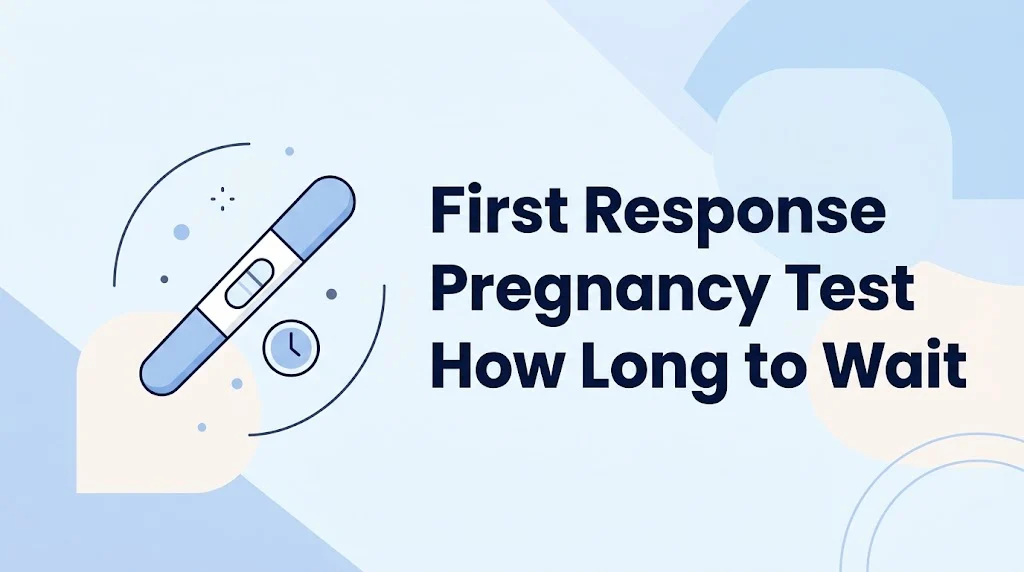
If you are using the FIRST RESPONSE™ Early Result Pregnancy Test, wait 3 full minutes before reading the result. Read it as soon as possible after 3 minutes and do not interpret a negative result after 10 minutes. Different FIRST RESPONSE™ tests have different timing, so always follow the instructions for your specific test.
3 full minutes, read the result promptly, check the control line, follow your test instructions, retest if needed
Waiting for a pregnancy test result can make three minutes feel like thirty. You take the test, put it down, stare at the window, check the clock, and somehow only 12 seconds have passed. If you are searching for first response pregnancy test how long to wait, you are probably looking for a simple answer without the confusing medical jargon.
For the FIRST RESPONSE™ Early Result Pregnancy Test, the official instructions say to wait 3 full minutes before reading the result. The result should be read as soon as possible after that, and a negative result should not be interpreted after 10 minutes.
Whether you are testing early, checking after a missed period, taking a digital test, or simply wondering whether that faint line counts, knowing how to read the test correctly can save you from unnecessary confusion and anxiety.
How Long Should You Wait for a First Response Pregnancy Test?
- Wait 3 full minutes.
Use this when you are taking the FIRST RESPONSE™ Early Result Pregnancy Test and want to know when to check the result.
Meaning: The official instructions say the result can be read after 3 full minutes. - Set a timer for 3 minutes.
Use this when you are worried about checking the test too early.
Meaning: A timer helps you avoid guessing about when the result is ready. - Read the result after the full waiting period.
Use this when the test window begins developing quickly.
Meaning: Waiting the specified time helps you interpret the test according to its instructions. - Do not panic if you see color moving across the window.
Use this when you notice pink color moving through the test area.
Meaning: The instructions note that this can happen while the test is developing. - Check the result at 3 minutes.
Use this when you want the manufacturer’s recommended reading point.
Meaning: Three minutes is the specified reading time for the Early Result test. - Do not keep checking it for hours.
Use this when you are tempted to leave the test sitting and interpret changes later.
Meaning: Results should be interpreted within the manufacturer’s stated time window. - Read it promptly after the waiting period.
Use this when you have reached the required time.
Meaning: Prompt reading reduces confusion caused by changes that occur later. - Follow the instructions for your exact test.
Use this when you are using a different FIRST RESPONSE™ product.
Meaning: Timing varies among test types. - The Early Result test uses a 3-minute reading time.
Use this when explaining the standard test to someone else.
Meaning: The manufacturer’s instructions specify 3 minutes. - The Rapid Result test is different.
Use this when comparing products in the FIRST RESPONSE™ range.
Meaning: The Rapid Result test is designed to provide a result in about 1 minute on the day of the missed period. - Digital tests also have their own timing.
Use this when you are using a digital FIRST RESPONSE™ test.
Meaning: The digital test displays a YES+ or NO- result in approximately 3 minutes. - Check the control indicator.
Use this when the result window looks unusual.
Meaning: The control line helps show that the test worked properly. - No control line means the test is invalid.
Use this when there are no lines where the instructions indicate a valid test should have one.
Meaning: You should repeat the test with another device. - Do not interpret a result after the stated limit.
Use this when a test has been sitting for a long time.
Meaning: Later changes can make the result unreliable. - Keep the test timing simple.
Use this when you are feeling overwhelmed while waiting.
Meaning: Follow the manufacturer’s timing rather than repeatedly checking the window.
What Does a First Response Pregnancy Test Detect?
- It detects hCG.
Use this when you want to understand what the test actually measures.
Meaning: The test detects human chorionic gonadotropin, commonly called hCG, in urine. - hCG is a pregnancy hormone.
Use this when explaining why the test can identify pregnancy.
Meaning: hCG is produced by the body during pregnancy. - The amount of hCG generally increases as pregnancy progresses.
Use this when wondering why an early test may be harder to interpret.
Meaning: Testing very early can produce a negative result even when pregnancy has begun. - A positive result usually indicates pregnancy.
Use this when you see the manufacturer’s indicated positive pattern.
Meaning: Detecting hCG normally indicates pregnancy, although medical confirmation may still be appropriate. - A negative result does not always rule out very early pregnancy.
Use this when testing before or around the expected period.
Meaning: There may not yet be enough hCG in urine for detection. - Early testing can be less reliable than testing later.
Use this when deciding whether to test several days before a period.
Meaning: hCG levels may be lower early in pregnancy. - The test measures urine, not pregnancy symptoms.
Use this when symptoms and test results seem different.
Meaning: The test result depends on detectable hCG rather than how you feel. - Symptoms alone cannot establish pregnancy.
Use this when someone is experiencing nausea, fatigue, or breast tenderness.
Meaning: A pregnancy test or healthcare professional is needed for confirmation. - The test can detect very small amounts of hCG.
Use this when discussing early-detection claims.
Meaning: Early-result tests are designed to detect low hormone levels. - Detection depends partly on timing.
Use this when an early result is negative.
Meaning: Testing before enough hCG has accumulated can affect the result. - Urine concentration can matter.
Use this when preparing to test.
Meaning: Very diluted urine may make hCG harder to detect. - Drinking excessive fluids before testing can dilute urine.
Use this when wondering why an early result might be negative.
Meaning: The manufacturer warns that excessive fluid intake can reduce detectable hCG concentration. - An expired test may not be reliable.
Use this when using an old pregnancy test from a drawer.
Meaning: Check the expiration date before testing. - Different tests have different sensitivity claims.
Use this when comparing Early Result, Digital, and Rapid Result products.
Meaning: Do not assume every FIRST RESPONSE™ test has identical performance or timing. - Always use the product instructions as your final guide.
Use this when online advice conflicts with your test’s package insert.
Meaning: The instructions for your specific product are the most relevant source for how to use it.
What Does a Positive Result Mean?
- Two pink lines can indicate pregnant on the Early Result test.
Use this when the test displays the manufacturer’s positive pattern.
Meaning: Two pink lines in the result window indicate pregnancy according to the instructions. - One line can indicate not pregnant.
Use this when the Early Result test shows its stated negative pattern.
Meaning: One pink line indicates a negative result on that test. - A faint second line can still matter.
Use this when a second line is visible within the valid reading period.
Meaning: A faint line may represent detected hCG, so follow the product instructions and consider confirmation. - Read faint lines only within the valid time window.
Use this when a line appears after the recommended reading period.
Meaning: A later change should not automatically be interpreted as a positive result. - A positive result usually means hCG was detected.
Use this when explaining why the test is positive.
Meaning: The test has detected the hormone associated with pregnancy. - Consider contacting a healthcare professional after a positive result.
Use this when you want confirmation or guidance about next steps.
Meaning: A home test is useful for detection but does not replace professional medical care. - A positive test and symptoms can occur together.
Use this when pregnancy symptoms accompany a positive result.
Meaning: Symptoms may be consistent with pregnancy, but the test detects hCG. - Do not compare line darkness as a precise measure of pregnancy progression.
Use this when comparing tests taken on different days.
Meaning: Line appearance is not designed to provide an exact measurement of hCG. - Do not wait hours before deciding what the result means.
Use this when a test is left on the counter.
Meaning: Interpret the result within the manufacturer’s reading window. - A positive result can be emotionally surprising.
Use this when someone feels overwhelmed after testing.
Meaning: It is normal to need time and support after receiving important news. - Write down when you tested if you are tracking results.
Use this when taking more than one test over several days.
Meaning: Recording dates can make your testing timeline easier to understand. - Follow up if the result does not match your expectations.
Use this when symptoms and test results seem inconsistent.
Meaning: A healthcare professional can help clarify uncertain results. - Do not rely on an internet photo to diagnose your result.
Use this when comparing your test with pictures online.
Meaning: Photos can be misleading because lighting and timing affect how lines appear. - A home test is a screening tool.
Use this when discussing what a positive result can and cannot establish.
Meaning: Professional healthcare advice may be needed for confirmation and care. - Take the next step based on the result and your circumstances.
Use this after receiving a positive result.
Meaning: The appropriate follow-up depends on your individual situation.
What Does a Negative Result Mean?
- One negative test may not settle the question if you tested early.
Use this when your period has not arrived and the test is negative.
Meaning: Early testing can occur before enough hCG is detectable. - Retest if your period does not arrive.
Use this when an early negative result is followed by a missed period.
Meaning: A later test may detect rising hCG. - Follow the retesting guidance for your specific product.
Use this when deciding when to test again.
Meaning: Manufacturer recommendations can differ by product. - A negative result can mean you are not pregnant.
Use this when the test was taken at an appropriate time.
Meaning: No detectable hCG was found under the test conditions. - A negative result can also mean it was too early.
Use this when testing before the expected period.
Meaning: hCG may not yet have reached detectable levels. - Cycle timing can affect interpretation.
Use this when your periods are irregular.
Meaning: An incorrectly estimated expected period can make an early test seem unexpectedly negative. - Do not immediately assume the test failed because it is negative.
Use this when the control line appeared correctly.
Meaning: A valid negative result can be a normal test outcome. - Check that the control line appeared.
Use this when reviewing a negative test.
Meaning: The control indicator helps establish whether the test functioned correctly. - Avoid reading a negative test after the stated time limit.
Use this when you discover the test hours later.
Meaning: The manufacturer says later changes should not be used to interpret the result. - Retesting can provide more information.
Use this when pregnancy remains possible.
Meaning: Hormone levels can change over time. - Do not overhydrate before retesting.
Use this when preparing for another urine test.
Meaning: Excessive fluid intake can dilute urine. - Use an unexpired test.
Use this when repeating the test.
Meaning: Expired tests may not provide reliable results. - Consider healthcare advice if uncertainty continues.
Use this when repeated testing does not answer your question.
Meaning: A healthcare professional can help determine appropriate next steps. - Do not use symptoms alone to overturn a test result.
Use this when symptoms are making you anxious.
Meaning: Symptoms have many possible causes and cannot confirm pregnancy. - Give yourself time before testing again.
Use this when repeated testing is becoming stressful.
Meaning: Waiting according to product guidance can make the next result more informative.
How Early Can You Take a First Response Pregnancy Test?
- The Early Result test can be used before a missed period.
Use this when you are considering early testing.
Meaning: FIRST RESPONSE™ says the Early Result test can detect pregnancy hormone up to 6 days before a missed period. - Early testing is not equally sensitive for every pregnancy.
Use this when explaining why early results vary.
Meaning: Some pregnant people may not have enough detectable hCG at an early stage. - Five days before the expected period can be quite early.
Use this when deciding whether to test well before your period.
Meaning: Detection is possible, but not every pregnancy will produce a positive result that early. - FIRST RESPONSE™ reports 76% detection five days before the expected period in laboratory testing.
Use this when discussing the manufacturer’s early-detection data.
Meaning: Some pregnancies may still be missed at that point. - Detection increases closer to the expected period.
Use this when deciding whether to wait.
Meaning: More pregnancy hormone may be available for detection as time passes. - The manufacturer reports more than 99% detection three days before the expected period in laboratory testing.
Use this when discussing product performance data.
Meaning: The test’s laboratory detection rate improves closer to the expected period. - A test taken on the expected period date can be more informative.
Use this when choosing between testing early and waiting.
Meaning: Pregnancy hormone levels may be easier to detect around the expected period. - Your cycle length matters.
Use this when your periods are irregular.
Meaning: An inaccurate estimate of the expected period can affect when you test. - Early testing can create more uncertainty.
Use this when you are tempted to test several days early.
Meaning: A negative result may require later retesting. - A negative early test does not necessarily end the question.
Use this when your period has not started.
Meaning: Testing again later may give a different result. - Digital and Early Result tests are not identical.
Use this when comparing FIRST RESPONSE™ products.
Meaning: Their early-detection claims and display systems can differ. - Rapid Result is designed for testing from the day of the missed period.
Use this when considering the Rapid Result version.
Meaning: The manufacturer recommends it on the missed-period day or afterward. - Read the package before testing early.
Use this when you have purchased a new version of the test.
Meaning: Product instructions are specific to the test model. - Do not assume every First Response test takes the same amount of time.
Use this when switching between products.
Meaning: Some versions have different result-reading times. - Testing later can reduce uncertainty.
Use this when you can comfortably wait.
Meaning: More time may allow hCG to become easier to detect.
What If There Is a Faint Line?
- A faint line within the valid reading window can be meaningful.
Use this when you see a light second line at the appropriate time.
Meaning: A visible second line may indicate detected hCG. - Do not judge a line that appears much later.
Use this when a line develops after the instructed reading window.
Meaning: Late changes should not be treated as a reliable result. - Check the instructions for your exact test.
Use this when unsure whether a faint line counts.
Meaning: Result interpretation can vary by product design. - Do not compare your test with random internet photos.
Use this when searching online for examples.
Meaning: Photos vary in lighting, focus, and timing. - A faint line can be difficult to interpret visually.
Use this when the result window is unclear.
Meaning: Visual interpretation can be uncertain, especially with very light lines. - Consider retesting according to product guidance.
Use this when you are unsure about an early result.
Meaning: A later test may provide clearer information. - A darker line is not a precise hCG measurement.
Use this when comparing tests from different days.
Meaning: Home tests are not designed to quantify pregnancy hormone levels by line darkness. - Use a fresh, unexpired test if you repeat testing.
Use this when checking a questionable result.
Meaning: An unexpired test gives you a more appropriate basis for retesting. - Avoid repeatedly testing every few minutes.
Use this when anxiety is taking over.
Meaning: Once the valid reading window has passed, staring at the same test will not make it more reliable. - Record the test date if you are tracking results.
Use this when taking tests over several days.
Meaning: Dates make it easier to understand changes over time. - A healthcare professional can help if results remain confusing.
Use this when home testing does not provide clarity.
Meaning: Professional assessment can resolve uncertainty. - Do not diagnose pregnancy from a screenshot.
Use this when someone sends you a photo of a test.
Meaning: A photograph cannot replace proper testing instructions or medical advice. - Consider the timing of the test.
Use this when interpreting a very faint result.
Meaning: Testing very early can produce subtle results. - Follow the manufacturer’s interpretation guide.
Use this when your result seems unusual.
Meaning: The product insert provides the intended criteria for reading the test. - Stay calm and focus on the next clear step.
Use this when a faint result feels overwhelming.
Meaning: A structured approach can make an uncertain situation easier to handle.
What If There Are No Lines?
- No lines can mean the test is invalid.
Use this when the expected control indicator is missing.
Meaning: The test may not have worked correctly. - Repeat with another test if the result is invalid.
Use this when no valid control line appears.
Meaning: A fresh test is needed for a meaningful result. - Check whether enough urine was used.
Use this when reviewing what may have gone wrong.
Meaning: Insufficient urine can contribute to an invalid result. - Review how you held the test.
Use this when the instructions required a specific position.
Meaning: Incorrect positioning can affect proper test operation. - Follow the package instructions carefully.
Use this when repeating the test.
Meaning: Correct technique helps reduce preventable errors. - Do not interpret an invalid test as negative.
Use this when there is no valid control indicator.
Meaning: An invalid test does not answer whether pregnancy is present. - Use an unexpired replacement.
Use this when repeating the test.
Meaning: Expiration can affect test reliability. - Keep the replacement test dry until use.
Use this when preparing a new test.
Meaning: Proper storage and handling are part of correct test use. - Read the instructions before opening the next test.
Use this when you are unsure what went wrong.
Meaning: Reviewing the procedure can prevent repeating the same mistake. - Do not keep an invalid test as evidence of pregnancy status.
Use this when the result window has no valid control indicator.
Meaning: An invalid test provides no dependable pregnancy result. - Do not rely on a blank window.
Use this when someone assumes no lines means not pregnant.
Meaning: A blank or invalid window is different from a valid negative result. - Retest according to the manufacturer’s directions.
Use this after an invalid result.
Meaning: A properly performed replacement test can provide a valid result. - Check for damage before using the replacement.
Use this when the package or test looks unusual.
Meaning: Damaged products may not function properly. - Ask a healthcare professional if repeated tests are invalid.
Use this when multiple attempts fail.
Meaning: Persistent testing problems may need professional guidance. - Do not keep guessing at an invalid result.
Use this when you are tempted to interpret marks or shadows.
Meaning: An invalid test should simply be repeated correctly.
Best Practices Before Taking the Test
- Check the expiration date.
Use this before opening any pregnancy test.
Meaning: Expired tests may not provide reliable results. - Read the instructions first.
Use this when testing with an unfamiliar product.
Meaning: Different test versions can have different procedures. - Have a timer ready.
Use this when you are nervous about missing the reading time.
Meaning: Timing the test precisely helps you follow the instructions. - Avoid excessive fluids immediately before testing.
Use this when preparing to take a urine test.
Meaning: Too much fluid can dilute urine and potentially make hCG harder to detect. - Use a clean cup if the cup method is specified.
Use this when collecting urine for the test.
Meaning: A clean, dry container helps you follow the testing procedure. - Keep the absorbent tip pointed correctly after testing.
Use this when using the Early Result stick.
Meaning: The manufacturer’s instructions specify how to position the test while it develops. - Place the test on a suitable flat surface.
Use this after completing the urine application.
Meaning: The instructions specify placing the stick on a flat, non-absorbent surface. - Do not rush the reading.
Use this when you are tempted to check immediately.
Meaning: The specified development period should be completed first. - Do not keep reading after the allowed period.
Use this when you find the test later.
Meaning: Later changes should be disregarded according to the instructions. - Keep the package insert nearby.
Use this when you want to double-check the result.
Meaning: The insert provides the exact interpretation guidance for your product. - Know which test version you bought.
Use this when you have several FIRST RESPONSE™ products at home.
Meaning: Timing and result formats differ between versions. - Give yourself privacy while testing.
Use this when the experience feels stressful.
Meaning: A calm environment can make it easier to follow each step carefully. - Do not rely on social media advice alone.
Use this when you find conflicting testing tips online.
Meaning: Product instructions are more appropriate for using a specific test. - Have another test available if early testing may be negative.
Use this when testing before your expected period.
Meaning: Early negative results may need later confirmation through repeat testing. - Contact a healthcare professional if you need personalized guidance.
Use this when you have questions about your specific situation.
Meaning: Individual medical circumstances can require advice beyond a home test.
Common Mistakes When Waiting for the Result
- Checking after only a few seconds.
Use this when anxiety makes you want to look immediately.
Meaning: The test needs its specified development time. - Forgetting to start a timer.
Use this when you regularly lose track of time.
Meaning: Timing mistakes can make result interpretation harder. - Reading a test hours later.
Use this when an old test is discovered on the counter.
Meaning: Results should only be interpreted within the manufacturer’s valid time window. - Assuming every First Response test has identical timing.
Use this when switching between products.
Meaning: Different versions have different instructions. - Ignoring the control line.
Use this when looking only for a second line.
Meaning: The control indicator helps establish whether the test worked. - Drinking excessive water before testing.
Use this when trying to produce enough urine quickly.
Meaning: Excessive fluids can dilute urine. - Using an expired test.
Use this when you find an old test in storage.
Meaning: Expiration can affect reliability. - Comparing your test with online photos.
Use this when a line looks different from examples.
Meaning: Online images are not standardized diagnostic references. - Testing much earlier than necessary without understanding the limitations.
Use this when you are eager for an answer.
Meaning: Early testing can increase uncertainty because hCG may still be low. - Assuming a negative result is always final.
Use this when testing before your expected period.
Meaning: Timing can influence whether hCG is detectable. - Ignoring the package insert.
Use this when advice online conflicts with the product directions.
Meaning: The product instructions should guide proper use. - Using the wrong interpretation window.
Use this when reading a test several minutes beyond the stated limit.
Meaning: Later changes may not be valid. - Taking multiple tests back-to-back without a reason.
Use this when anxiety is driving repeated testing.
Meaning: Immediate repetition may not provide substantially different information. - Treating an invalid test as a negative test.
Use this when no control line appears.
Meaning: An invalid test should be repeated. - Panicking over a small visual difference.
Use this when the result looks faint or unusual.
Meaning: Following the official interpretation guide is more useful than guessing from appearance.
First Response Pregnancy Test Timing by Test Type
- Early Result: wait 3 minutes.
Use this when using the standard Early Result stick.
Meaning: The official instructions specify reading the result at 3 minutes. - Rapid Result: approximately 1 minute.
Use this when using the Rapid Result version on the day of your missed period.
Meaning: The manufacturer says the result should appear within 1 minute on the missed-period day. - Digital: approximately 3 minutes.
Use this when using the FIRST RESPONSE™ Digital Pregnancy Test.
Meaning: The digital display provides a YES+ or NO- result in approximately 3 minutes. - EasyCup: wait 5 full minutes.
Use this when using the FIRST RESPONSE™ EasyCup test.
Meaning: Its instructions specify waiting 5 full minutes before reading the result. - Do not mix instructions between products.
Use this when you have more than one test type.
Meaning: Each product has its own procedure and reading time. - Check the exact product name.
Use this when the packaging is unclear.
Meaning: Identifying the test version helps you use the correct timing. - Read the insert that came with your test.
Use this whenever there is uncertainty.
Meaning: The insert provides the product-specific instructions. - Do not assume a one-minute test applies to every First Response product.
Use this when switching from Rapid Result to Early Result.
Meaning: Timing differs between models. - Do not assume a three-minute test applies to every First Response product.
Use this when using EasyCup or Rapid Result.
Meaning: Other versions have different reading instructions. - Use a timer whenever the instructions specify one.
Use this when testing at home.
Meaning: A timer helps you avoid accidentally reading too early or late. - Check the valid reading window as well as the waiting time.
Use this when you want to know how long the result remains interpretable.
Meaning: The beginning and end of the reading window both matter. - Read Early Result between the specified limits.
Use this when using that specific stick.
Meaning: The manufacturer’s instructions state the result can be read from 3 to 10 minutes. - Do not read a negative Early Result after 10 minutes.
Use this when an old test has been sitting out.
Meaning: The manufacturer says later changes should be disregarded. - Follow the current package instructions if they differ.
Use this when your product packaging gives different directions.
Meaning: Product instructions are the most relevant guide for the specific test you have. - When in doubt, check the manufacturer’s instructions before interpreting the result.
Use this when the test looks unusual.
Meaning: Correct interpretation depends on the exact product and timing.
What If the Result Is Negative but Your Period Does Not Come?
- Consider retesting.
Use this when your period still has not started after a negative test.
Meaning: A later test may detect hCG that was too low to detect initially. - Follow the specific product’s retesting advice.
Use this when deciding when to test again.
Meaning: Manufacturer recommendations can vary. - Remember that cycle timing can be off.
Use this when your period is irregular or unpredictable.
Meaning: You may have tested earlier than you realized. - Do not automatically assume the test was wrong.
Use this when the negative result surprises you.
Meaning: A negative test can be accurate even when your period timing changes. - Do not automatically assume pregnancy either.
Use this when a period is late.
Meaning: Delayed periods can have many causes. - Avoid excessive fluids before the next test.
Use this when preparing to retest.
Meaning: Diluted urine can make hCG harder to detect. - Use an unexpired test.
Use this when testing again.
Meaning: Expired products may be unreliable. - Consider using the first morning urine if appropriate for your test.
Use this when you want a more concentrated sample.
Meaning: First morning urine is often more concentrated, although some FIRST RESPONSE™ tests can be used at different times. - Contact a healthcare professional if repeated results remain unclear.
Use this when your period remains absent and home tests are confusing.
Meaning: Professional guidance can help determine what is happening. - Keep track of your test dates.
Use this when taking multiple tests.
Meaning: A timeline can help you and your healthcare professional understand the situation. - Do not keep rereading old tests.
Use this when an earlier negative test develops a later mark.
Meaning: Results outside the valid window should not be used. - Consider the date of your expected period.
Use this when interpreting an early negative.
Meaning: Testing relative to the expected period affects how informative the result may be. - Give a later test more weight than an extremely early test.
Use this when comparing results from different dates.
Meaning: hCG generally increases as pregnancy progresses. - Seek professional advice if you remain concerned.
Use this when uncertainty is causing significant worry.
Meaning: Individual circumstances may need personalized assessment. - Do not let one confusing test result send you into a Google spiral.
Use this when online searching is making you more anxious.
Meaning: Clear testing steps and appropriate medical guidance are more useful than endless speculation.
FAQs
How long should you wait for a First Response pregnancy test?
For the FIRST RESPONSE™ Early Result test, wait 3 full minutes before reading the result.
Can I read the Early Result test before 3 minutes?
The manufacturer instructs users to wait 3 full minutes before reading the Early Result test. Reading it early can make the result difficult to interpret correctly.
What happens if I leave the pregnancy test too long?
For the Early Result test, the manufacturer says to read the result as soon as possible after 3 minutes and not interpret a negative result after 10 minutes.
How early can I take a First Response pregnancy test?
The Early Result test is designed to detect hCG up to 6 days before a missed period, although detection is less consistent the earlier you test.
What does a faint second line mean?
A faint second line that appears within the valid reading period may indicate detected hCG.
Conclusion
Waiting for a pregnancy test result can feel surprisingly intense, especially when every second seems to move in slow motion. The key is to follow the instructions for the exact test you are using rather than guessing from online advice or checking the window repeatedly.
For the FIRST RESPONSE™ Early Result test, the manufacturer’s instructions specify a 3-minute wait, followed by prompt reading within the stated window. Other products, including Rapid Result, Digital, and EasyCup versions, have different timing instructions.
Take a breath, use a timer, follow the instructions, and give yourself space to process the result. If anything remains unclear, retesting or speaking with a healthcare professional can provide the next step.
Discover More Related Articles:
- How to Respond to I’m Sorry | Politely & With Confidence In 2026
- How to Respond to a Recruiter on LinkedIn | About a Job Opportunity In 2026

Laura Adams is a dedicated content writer and blogger known for crafting clear, informative, and engaging articles. As a contributor to Responary.com, she specializes in creating reader-friendly content that educates, inspires, and keeps audiences informed on a wide range of subjects.