Quick Answer
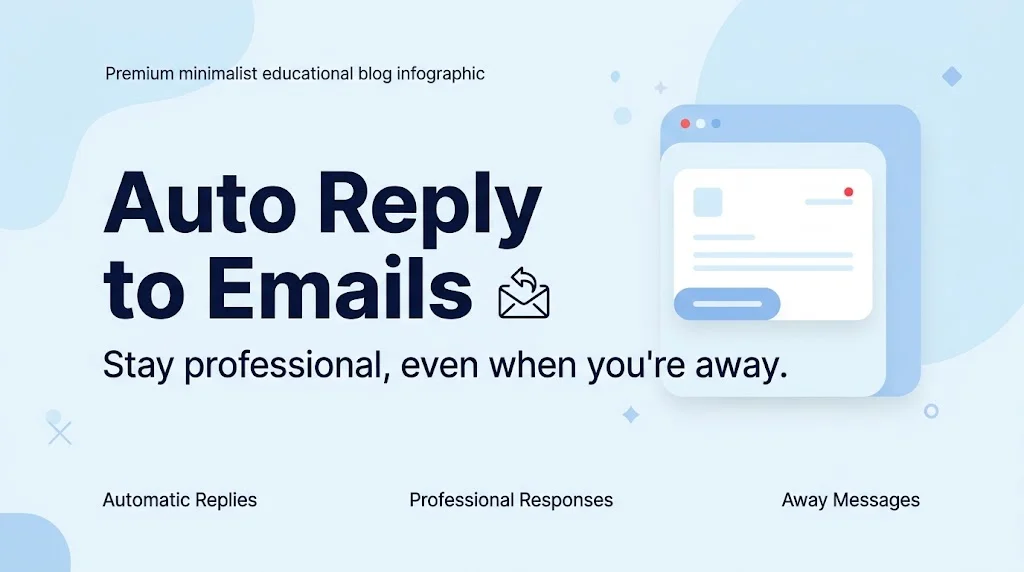
The best auto reply to emails should quickly tell people why you are unavailable, when they can expect a response, and who they can contact if something is urgent. Keep it clear, friendly, and useful rather than sounding like a copy-paste robot.
Try these: Thank you for your email, I’m currently out of the office, I’ll respond when I return, your message has been received, I’ll get back to you shortly
Nothing says “I have temporarily disappeared from my inbox” quite like an automatic email reply. Whether you are taking a vacation, attending a conference, working after hours, handling a flood of customer messages, or simply stepping away from your desk, a good auto reply keeps people informed without making them wonder whether their email vanished into the internet void.
The trick is finding the right balance. Your message should be professional enough for clients and coworkers but human enough that it does not sound like it was written by a fax machine. A useful automatic response usually explains your availability, gives a realistic response timeframe, and provides another contact when necessary.
Below, you will find ready-to-use examples for work, business, customer service, holidays, vacations, urgent requests, and even a few fun situations.
Professional Auto Replies
- Thank you for your email. I am currently unavailable and will respond as soon as possible.
Use this when you need a simple professional message without giving personal details.
Meaning: You have received the email and intend to respond when available. - Thank you for reaching out. I am currently away from my email and will reply upon my return.
Use this when you are temporarily away from your inbox.
Meaning: You are unavailable now but plan to respond later. - Thank you for your message. I am currently out of the office and will return on [date].
Use this for a standard workplace absence.
Meaning: You are clearly providing your return date. - Your email has been received. I will review it and respond as soon as I can.
Use this when you want to acknowledge incoming messages.
Meaning: The sender knows their email arrived successfully. - Thank you for contacting me. I will respond to your message after I return on [date].
Use this for planned leave.
Meaning: You are setting a clear expectation for a later response. - I appreciate your message and will get back to you at my earliest convenience.
Use this when you do not want to provide an exact date.
Meaning: You intend to respond but cannot promise a specific time. - Thank you for your patience. I am currently unavailable and will respond when I return.
Use this for temporary absences.
Meaning: You are politely asking the sender to wait. - I am currently away from my desk with limited access to email.
Use this when you may occasionally check messages.
Meaning: Your email access is restricted rather than completely unavailable. - Thank you for your email. Your message is important to me, and I will respond as soon as possible.
Use this for customer-facing or professional communication.
Meaning: You are reassuring the sender that their message matters. - I am currently unavailable but will review your email upon my return.
Use this for a concise automatic response.
Meaning: You are postponing review until you are available again. - Thank you for getting in touch. I will follow up once I am back in the office.
Use this when you want a friendly professional tone.
Meaning: You are promising follow-up after your absence. - Your message has been received and will be reviewed as soon as possible.
Use this for business or support inboxes.
Meaning: The email has successfully entered the response queue. - Thank you for your understanding while I am away.
Use this as a short addition to an out-of-office message.
Meaning: You are politely acknowledging the inconvenience of your absence. - I appreciate your email and look forward to responding when I return.
Use this when you want to sound warm but professional.
Meaning: You are showing appreciation while setting expectations. - Thank you for your message. I will be in touch after [date].
Use this when you need an especially short reply.
Meaning: You are giving the sender a clear follow-up point.
Out Of Office Auto Replies
- Thank you for your email. I am currently out of the office and will return on [date].
Use this as a classic vacation or leave message.
Meaning: You are clearly communicating your absence and return date. - I am currently out of the office with limited access to email.
Use this when you may occasionally check your inbox.
Meaning: You may see messages but cannot guarantee quick replies. - I am away from the office until [date] and will respond when I return.
Use this for planned time away.
Meaning: You are setting expectations for delayed communication. - Thanks for your email. I am currently away and will be back on [date].
Use this for a friendlier workplace tone.
Meaning: You are unavailable but have provided a return date. - I am out of the office from [date] through [date] and will respond after I return.
Use this when you want to give a complete absence period.
Meaning: You are clearly defining when you will be unavailable. - Thank you for reaching out. I am away from the office until [date].
Use this for clients or coworkers.
Meaning: You are acknowledging the message while explaining your absence. - I am currently out of the office and may not be able to respond during this time.
Use this when your access is uncertain.
Meaning: You are warning the sender that replies may be delayed. - I am away at the moment and will catch up on emails when I return.
Use this for a relaxed but professional workplace message.
Meaning: You are letting people know their messages will be reviewed later. - Thanks for getting in touch. I am currently away and will respond as soon as I am back.
Use this when you want a conversational tone.
Meaning: You are postponing your response until your return. - I am currently unavailable due to being out of the office.
Use this for a very concise message.
Meaning: You are simply notifying senders that you are unavailable. - I will have limited email access until [date].
Use this when you can occasionally monitor your inbox.
Meaning: Responses may take longer than normal. - I am currently away from the office and will return on [date]. Thank you for your patience.
Use this for clients and professional contacts.
Meaning: You are combining a return date with a polite request for patience. - I am away from email for a short period and will respond once I am available.
Use this for brief absences.
Meaning: You are explaining the delay without sharing unnecessary details. - I am currently unavailable and will resume responding to emails on [date].
Use this when you want a polished corporate tone.
Meaning: Normal email communication will resume on a specific date. - Thank you for your message. I am out of the office and look forward to connecting when I return.
Use this for important clients or contacts.
Meaning: You are maintaining a warm relationship despite your absence.
Vacation Auto Replies
- Thanks for your email. I am currently enjoying some time away and will return on [date].
Use this when you want to mention vacation without oversharing.
Meaning: You are unavailable because you are taking personal time. - I am currently on vacation and will respond after [date].
Use this for a straightforward vacation notice.
Meaning: You are clearly explaining why your response will be delayed. - I am away enjoying a little downtime and will be back on [date].
Use this for a friendly workplace message.
Meaning: You are taking a break and will return on the stated date. - Thank you for your email. I am taking a break and will catch up when I return.
Use this when you want a human tone.
Meaning: You are intentionally stepping away from work. - I am currently on vacation with limited access to email.
Use this when you may check messages occasionally.
Meaning: You may not respond quickly while away. - I am away on vacation until [date]. I will reply once I am back.
Use this for a clean and direct message.
Meaning: You are postponing your response until your vacation ends. - Thanks for reaching out. I am currently taking some well-earned time off.
Use this when you want a slightly playful tone.
Meaning: You are communicating that you are intentionally offline. - I am currently away enjoying some time offline and will respond when I return.
Use this when you want to emphasize a digital break.
Meaning: You are deliberately limiting email access. - I am on vacation from [date] to [date] and will have limited access to my inbox.
Use this when dates matter to clients.
Meaning: You are clearly explaining your availability. - Thank you for your message. I am away and will return refreshed on [date].
Use this for a positive vacation message.
Meaning: You are unavailable now but expect to return ready to work. - I am taking some time away and will respond to emails after [date].
Use this when you prefer not to specify the reason.
Meaning: You are setting a clear response timeframe. - Currently away, recharging, and back on [date].
Use this for a short and friendly auto reply.
Meaning: You are taking a break and have shared your return date. - I am stepping away from email while I enjoy some vacation time.
Use this for a casual professional audience.
Meaning: You are intentionally disconnecting from your inbox. - Vacation mode is on. I will respond when I am back on [date].
Use this with colleagues who appreciate casual wording.
Meaning: You are unavailable until the stated return date. - Thanks for your patience while I enjoy a little time away. I will be back on [date].
Use this when you want your message to feel warm.
Meaning: You are politely asking people to wait until your return.
Funny Auto Replies
- I am currently out of the office and temporarily pretending my inbox does not exist.
Use this with colleagues who appreciate workplace humor.
Meaning: You are joking about taking a genuine break from email. - I have escaped the inbox and will return on [date].
Use this when your workplace culture is casual.
Meaning: You are humorously describing your temporary absence. - My inbox and I are taking some personal space until [date].
Use this for a playful out-of-office message.
Meaning: You are jokingly framing your absence as an inbox breakup. - Currently unavailable because I have temporarily chosen peace over email.
Use this with a relaxed professional audience.
Meaning: You are humorously explaining your decision to disconnect. - I am away from my desk and giving my inbox a much-needed timeout.
Use this during vacation or personal leave.
Meaning: You are playfully saying that emails will have to wait. - I am currently offline. My inbox is surviving without me. Somehow.
Use this for colleagues who enjoy dry humor.
Meaning: You are joking about leaving your email unattended. - I have entered vacation mode. Email replies have temporarily left the chat.
Use this for a casual team environment.
Meaning: You are humorously announcing delayed responses. - I am away until [date]. Please resist the urge to send twelve follow-ups.
Use this only with people who appreciate playful teasing.
Meaning: You are asking senders to avoid repeated messages. - My email is currently on a tiny holiday of its own.
Use this for a lighthearted vacation auto reply.
Meaning: You are joking that your inbox is also taking time off. - I am currently unavailable, but my inbox remains dramatically optimistic.
Use this for a witty workplace message.
Meaning: You are humorously acknowledging the growing inbox. - Out of office until [date]. Future me will deal with this.
Use this with a casual internal audience.
Meaning: You are joking about leaving your future self the workload. - I am away from email and pretending notifications are not real.
Use this for a playful personal brand.
Meaning: You are humorously describing your digital detox. - Currently offline because even inboxes deserve boundaries.
Use this for a modern, casual professional audience.
Meaning: You are jokingly emphasizing work-life boundaries. - I have temporarily traded emails for actual life. I will return on [date].
Use this during vacation.
Meaning: You are playfully announcing that you are enjoying time away. - The inbox is still here. I am not. Back on [date].
Use this when you want an extremely short witty reply.
Meaning: You are clearly stating that you are unavailable.
Customer Service Auto Replies
- Thank you for contacting us. We have received your message and will respond shortly.
Use this for a general customer support inbox.
Meaning: The customer knows their message was successfully received. - Thanks for reaching out to our team. Your request is now in our queue.
Use this when support requests are handled sequentially.
Meaning: Their request has entered the support process. - We have received your inquiry and expect to respond within [timeframe].
Use this when your team has a standard response time.
Meaning: You are setting a clear expectation. - Thank you for contacting support. A member of our team will review your message shortly.
Use this for customer service inquiries.
Meaning: Someone will assess the request before responding. - Your support request has been received. We will be in touch within [timeframe].
Use this after customers submit a support issue.
Meaning: The customer knows when to expect a response. - Thanks for your patience. Our team is currently reviewing your request.
Use this when the support queue is busy.
Meaning: You are explaining that the request is being processed. - We have your message and are working on getting you an answer.
Use this for a friendly customer service voice.
Meaning: The customer is reassured that their issue is being handled. - Your message has reached the right team. We will respond as soon as possible.
Use this for general company inboxes.
Meaning: The customer knows their message is with the appropriate department. - Thank you for reaching out. We typically respond within [timeframe].
Use this when your business has a predictable response window.
Meaning: You are giving customers a realistic waiting period. - We appreciate your message and will get back to you shortly.
Use this for a warm customer experience.
Meaning: You are acknowledging their request positively. - Your inquiry is safely in our inbox. We will be in touch soon.
Use this when you want a friendly tone.
Meaning: You are reassuring the sender that nothing was lost. - Thanks for contacting us. While you wait, please check our Help Center for quick answers.
Use this when common questions are covered online.
Meaning: You are giving the customer an immediate resource. - We have received your request and will review the details before responding.
Use this for technical or detailed inquiries.
Meaning: The team needs time to properly assess the issue. - Thank you for your patience while our team works through your request.
Use this during periods of high support volume.
Meaning: You are acknowledging that the response may take longer. - Your message has been received. We look forward to helping you.
Use this as a warm general support reply.
Meaning: You are reassuring the customer that assistance is coming.
After Hours Auto Replies
- Thank you for your email. Our office is currently closed. We will respond during the next business day.
Use this outside normal working hours.
Meaning: The sender knows why their response may be delayed. - Thanks for reaching out after hours. Our team will review your message when we reopen.
Use this for customer service.
Meaning: The message has been received but will wait until business resumes. - You have reached us outside our regular business hours. We will respond on the next working day.
Use this for a company inbox.
Meaning: You are clearly explaining the delayed response. - Our team is currently offline. We will get back to you during business hours.
Use this for a friendly after-hours message.
Meaning: Your team is unavailable until normal hours resume. - Thank you for your message. We are currently outside our standard response hours.
Use this for a more formal business tone.
Meaning: You are informing the sender that their email arrived outside working hours. - Our inbox is open, but our team is currently offline. We will respond tomorrow.
Use this for a modern customer service voice.
Meaning: The email was received even though staff are unavailable. - Thanks for your email. We will pick this up when our team returns tomorrow.
Use this for a casual workplace or business audience.
Meaning: The message will be handled on the next working day. - You caught us after hours. We will be back in the inbox on [day].
Use this for a friendly brand voice.
Meaning: You are communicating when normal email service resumes. - Our office is currently closed for the day. We will respond as soon as business resumes.
Use this for a straightforward message.
Meaning: The sender should expect a response during the next work period. - Thank you for contacting us. Your email will be reviewed on our next business day.
Use this for professional customer communication.
Meaning: The message is safely waiting for review. - We are currently offline for the evening. Thanks for your patience until tomorrow.
Use this for a relaxed company tone.
Meaning: The team will respond after returning to work. - Our team has signed off for today and will respond during regular business hours.
Use this for a human-sounding business reply.
Meaning: The team is unavailable until normal hours. - Thanks for your message. We will be back online at [time].
Use this when your reopening time is predictable.
Meaning: You are providing a specific expectation. - We are currently closed, but your message has been received.
Use this when you want maximum clarity.
Meaning: The sender knows the message arrived successfully. - Good news: your email reached us. The only catch is that we are currently offline.
Use this for a slightly playful after-hours message.
Meaning: You are acknowledging the message while explaining the delay.
Holiday Auto Replies
- Thank you for your email. Our office is closed for the holiday and will reopen on [date].
Use this for a company-wide holiday closure.
Meaning: You are providing the closure and reopening dates. - Happy holidays! Our team is currently away and will respond when we return on [date].
Use this for a warm seasonal message.
Meaning: You are combining a holiday greeting with availability information. - Our team is taking a short holiday break and will return on [date].
Use this for a friendly business auto reply.
Meaning: You are explaining the temporary closure. - Thank you for your message. We will respond after the holiday on [date].
Use this for a simple seasonal notice.
Meaning: The response will come after the holiday period. - Wishing you a wonderful holiday while our team takes a little time away.
Use this when you want a warm brand voice.
Meaning: You are wishing the sender well while explaining your absence. - Our office is closed for the holiday season and will reopen on [date].
Use this for longer seasonal closures.
Meaning: You are communicating the full closure period. - Thanks for reaching out. We are currently enjoying the holiday break and will return shortly.
Use this for casual business communication.
Meaning: Your team is temporarily unavailable. - Seasonal break activated. We will be back on [date].
Use this for a modern and playful company voice.
Meaning: You are announcing a temporary holiday closure. - Thank you for your patience while our team celebrates the holiday.
Use this when response times may be longer.
Meaning: You are asking customers to allow extra time. - Our team is away for the holiday and will respond to your email upon returning.
Use this for a polished professional message.
Meaning: Emails will be addressed after the break. - Holiday hours are currently in effect. We will respond during regular hours on [date].
Use this for businesses with modified schedules.
Meaning: The sender knows when normal service resumes. - Thank you for contacting us. We hope you enjoy the holiday as much as our team does.
Use this for a warm brand personality.
Meaning: You are keeping the holiday message friendly. - Our inbox is receiving messages, but our team is taking a holiday pause.
Use this for a casual seasonal response.
Meaning: Emails are arriving even though staff are temporarily away. - Wishing you a peaceful holiday. We will reconnect when our office reopens on [date].
Use this for a polished seasonal response.
Meaning: You are combining warmth with a clear return date. - Happy holidays from our team. We will respond as soon as we are back.
Use this for a short business greeting.
Meaning: You are offering a seasonal wish while setting expectations.
Meeting And Conference Auto Replies
- Thank you for your email. I am currently attending a conference and may have limited access to email.
Use this during professional events.
Meaning: Your response may be slower because of the conference. - I am currently attending meetings throughout the day and may not respond immediately.
Use this during a busy workday.
Meaning: Your schedule is limiting your email availability. - I am attending [event name] from [date] to [date] and will respond when I can.
Use this when your event schedule spans multiple days.
Meaning: You are giving senders useful timing information. - Thanks for reaching out. I am currently at a conference and will catch up on email afterward.
Use this for a friendly professional tone.
Meaning: You plan to handle messages after the event. - I am currently in meetings and will respond as soon as my schedule allows.
Use this during a packed workday.
Meaning: Your response is delayed by meetings. - I am away from my desk attending meetings today.
Use this for a concise internal message.
Meaning: You are unavailable because of your schedule. - Thank you for your patience while I attend [event name].
Use this when your absence is event-related.
Meaning: You are politely asking for extra response time. - I am currently attending a professional event with limited inbox access.
Use this for clients or business contacts.
Meaning: You may not be able to check email regularly. - I am tied up with meetings today and will respond later this afternoon.
Use this when you know when you will be free.
Meaning: You are giving a specific expected response period. - I am currently away from email for meetings and will follow up afterward.
Use this when the message requires a later response.
Meaning: You intend to respond once meetings finish. - Thank you for your email. I am currently attending a conference and will reply after [date].
Use this for a multi-day event.
Meaning: You are providing a clear expected response point. - I am currently focused on meetings and may be slower than usual to respond.
Use this for a busy workday.
Meaning: You are setting expectations for delayed replies. - I am away attending meetings but will check my inbox when possible.
Use this when you expect occasional email access.
Meaning: You may respond intermittently. - Currently at [event name], learning, networking, and catching up later.
Use this for a casual professional audience.
Meaning: You are explaining your temporary focus away from email. - Thanks for your message. I will give it my full attention after my meetings conclude.
Use this when the sender deserves a thoughtful response.
Meaning: You are prioritizing a proper response rather than rushing.
Urgent Matter Auto Replies
- If your request is urgent, please contact [name] at [email].
Use this when another person can handle urgent matters.
Meaning: You are giving senders an alternative contact. - For time-sensitive requests, please reach out to [name].
Use this when only urgent issues need immediate attention.
Meaning: You are directing urgent matters elsewhere. - If you need immediate assistance, please contact our team at [email].
Use this for customer or business support.
Meaning: Senders have another route for urgent help. - For urgent matters during my absence, please contact [name] at [email].
Use this for out-of-office situations.
Meaning: Another person is covering important requests. - If this cannot wait until my return, please contact [name].
Use this for a more conversational workplace tone.
Meaning: You are providing an alternative for genuinely urgent issues. - For immediate support, please contact [department] at [email].
Use this when a specialized team handles urgent requests.
Meaning: You are directing the sender to the appropriate resource. - Urgent request? Please contact [name], who will be happy to assist.
Use this for a friendly professional message.
Meaning: Another person is available to help while you are away. - For anything time-sensitive, please reach out to [contact].
Use this when your absence could affect deadlines.
Meaning: You are providing a backup route for urgent needs. - I may not see emails promptly. For urgent matters, please contact [name].
Use this when you will have very limited inbox access.
Meaning: You are warning senders not to rely on your immediate response. - If you require assistance before [date], please contact [name].
Use this when you know exactly when you return.
Meaning: You are offering help through another person during the gap. - For urgent customer requests, please contact our support team at [email].
Use this for business inboxes.
Meaning: Customers have a dedicated urgent support channel. - If your matter is deadline-sensitive, please contact [name] directly.
Use this for professional projects.
Meaning: You are prioritizing matters with strict deadlines. - For immediate assistance, our team can be reached at [phone/email].
Use this when another communication channel is available.
Meaning: You are providing a faster alternative to email. - If you need a response before I return, please contact [name].
Use this for planned absences.
Meaning: You are helping the sender avoid waiting unnecessarily. - Urgent matter? My colleague [name] is covering while I am away.
Use this for a friendly internal or client-facing message.
Meaning: You are identifying the person responsible during your absence.
Creative Auto Replies
- My inbox is taking a short vacation, and I am joining it. Back on [date].
Use this when your company culture allows personality.
Meaning: You are making an ordinary absence notice more memorable. - Currently offline and collecting memories instead of emails.
Use this during vacation.
Meaning: You are emphasizing that you are intentionally disconnecting. - Email has entered waiting mode. I will return on [date].
Use this for a short creative response.
Meaning: Messages will wait until you return. - I have temporarily swapped notifications for fresh air.
Use this when taking personal time.
Meaning: You are humorously describing your break from technology. - The inbox is paused while real life gets the spotlight.
Use this for a creative vacation message.
Meaning: You are prioritizing personal time over email. - Currently away making memories. Email replies resume on [date].
Use this for a polished creative message.
Meaning: You are taking time away and have provided a return date. - My keyboard is resting, my inbox is waiting, and I will be back on [date].
Use this for a playful absence notice.
Meaning: You are temporarily stepping away from email. - I am temporarily unavailable while I recharge offline.
Use this when you want something modern and concise.
Meaning: You are taking time to reset away from work. - The inbox can wait. I will be back on [date].
Use this for a confident vacation message.
Meaning: You are deliberately prioritizing your break. - Currently unavailable for email, available for enjoying the day.
Use this for a lighthearted personal auto reply.
Meaning: You are choosing personal time over work communication. - Out of office, into the moment. Back on [date].
Use this for a stylish short message.
Meaning: You are focusing on being present while away. - Emails are waiting patiently while I take a little time offline.
Use this for a warm creative tone.
Meaning: You are acknowledging delayed responses without sounding cold. - I am away from my inbox and closer to a much-needed reset.
Use this for a wellness-focused break.
Meaning: You are using your absence to recharge. - The auto-reply is doing the talking while I am doing literally anything else.
Use this with a casual audience that enjoys humor.
Meaning: You are joking about letting automation handle email. - Temporarily unavailable. Permanently grateful for the break.
Use this as a concise vacation message.
Meaning: You are expressing appreciation for your time away.
Friendly And Casual Auto Replies
- Hey! Thanks for your email. I am currently away and will be back on [date].
Use this for a relaxed workplace.
Meaning: You are keeping the message warm and informal. - Thanks for reaching out! I will get back to you when I am back.
Use this when you want a conversational tone.
Meaning: You are acknowledging the email and promising follow-up. - Hi there! I am currently away from my inbox and will reply soon.
Use this for friendly client communication.
Meaning: You are letting the sender know a response is coming. - Thanks for your message! I am taking a little time away and will return on [date].
Use this for vacation or personal leave.
Meaning: You are sharing your absence in a warm way. - Hey! You caught me away from my desk. I will reply when I am back.
Use this for a casual business audience.
Meaning: You are unavailable but plan to follow up. - Thanks for the email. I am currently offline but will catch up soon.
Use this when you want a short friendly message.
Meaning: You are temporarily unavailable. - Hi! I am away for a bit and will respond after [date].
Use this for short planned absences.
Meaning: You are setting a simple response expectation. - Thanks for reaching out. I will circle back as soon as I am available.
Use this with colleagues or clients.
Meaning: You plan to follow up when your schedule allows. - I am currently away from email, but your message is safely waiting for me.
Use this to reassure the sender.
Meaning: You have not forgotten their message. - Thanks for your patience while I am away. I will be in touch soon.
Use this for a friendly professional response.
Meaning: You are politely asking the sender to wait. - Hi! I am currently unavailable and will catch up on messages when I return.
Use this for general correspondence.
Meaning: You will review the inbox later. - Thanks for stopping by my inbox. I will get back to you soon.
Use this when you want a playful conversational tone.
Meaning: You are acknowledging their message warmly. - I am away right now, but I will reconnect when I am back.
Use this for personal or professional contacts.
Meaning: You intend to continue the conversation later. - Thanks! I am temporarily offline and will reply when I return.
Use this as a simple friendly message.
Meaning: You are unavailable for the moment. - Appreciate your email! I will be back in touch soon.
Use this when you want a positive closing.
Meaning: You are showing gratitude and promising follow-up.
Short And Simple Auto Replies
- Thanks for your email. I will respond soon.
Use this when you need the shortest useful message.
Meaning: You have received the email and plan to reply. - Currently unavailable. I will respond when I return.
Use this for a simple absence notice.
Meaning: Your response is delayed because you are unavailable. - Thank you for your message. I will get back to you shortly.
Use this for everyday professional communication.
Meaning: You are acknowledging the message and promising follow-up. - I am currently away from email.
Use this when you need a very concise notice.
Meaning: You are temporarily unavailable. - Your message has been received. Thank you.
Use this for a simple acknowledgment.
Meaning: The sender knows the email arrived. - I will respond as soon as I am available.
Use this when your return time is uncertain.
Meaning: You intend to respond once your schedule allows. - Thank you. I will be in touch soon.
Use this for a friendly professional reply.
Meaning: You are promising a future response. - Currently out of office. Back on [date].
Use this for a compact vacation message.
Meaning: You are clearly stating your absence and return. - Away from email until [date].
Use this when maximum brevity matters.
Meaning: You are unavailable until the stated date. - Thanks for reaching out. I will reply when I return.
Use this for planned leave.
Meaning: You are acknowledging the email while postponing the response. - Message received. Response coming soon.
Use this for a casual support inbox.
Meaning: The message has entered the response process. - I am unavailable right now but will follow up later.
Use this when you need a flexible timeframe.
Meaning: You are delaying your response temporarily. - Thank you for your patience. I will respond shortly.
Use this when the sender may already be waiting.
Meaning: You are acknowledging the delay and promising action. - Away today. Responding tomorrow.
Use this when your absence lasts one working day.
Meaning: You are providing a simple response expectation. - Thanks for your message. I will follow up soon.
Use this for a clean general-purpose response.
Meaning: You are confirming that you will continue the conversation.
FAQs
What is an auto reply to emails?
It is an automatic message sent by an email system when someone contacts you.
What should an automatic email response include?
A useful message generally explains your availability, gives a return or response timeframe, and provides an alternative contact when urgent help is needed.
Should an auto reply be professional?
For work, clients, and customers, yes. You can still make it friendly and human, but the message should clearly communicate useful information.
Can an auto reply be funny?
Absolutely, if the audience and workplace culture allow it. Humor works best when the message still provides practical details such as your return date or an alternative contact.
Should I include my return date?
Usually, yes. A specific date helps people understand when they can reasonably expect a response.
Conclusion
A good automatic email response does more than announce that you are away. It manages expectations, reassures the sender, protects your time, and keeps communication moving while you are unavailable. The best messages are clear enough for clients, friendly enough for coworkers, and flexible enough for different situations.
You do not need to make every auto reply sound like a corporate memo. A simple message can work beautifully, while a little personality can make your brand or workplace communication more memorable.
Choose the wording that matches your audience, add your dates and contact details where needed, and let your inbox breathe for a while. Save these examples for your next vacation, busy workday, holiday, conference, or inbox overload. Your future self will definitely appreciate it.
Discover More Related Articles:
- Responses to USCIS’ Request for Evidence Was Received In 2026
- Flirty Response to a Picture From a Guy | Without Sounding Too Eager In 2026

Jennifer Wilson is an experienced writer and content creator with over 20 years of expertise in digital publishing, lifestyle, and informative content. Holding a degree in English Literature, she contributes to Responary.Com, where she shares engaging, well-researched articles that help readers stay informed and inspired.