Quick Answer
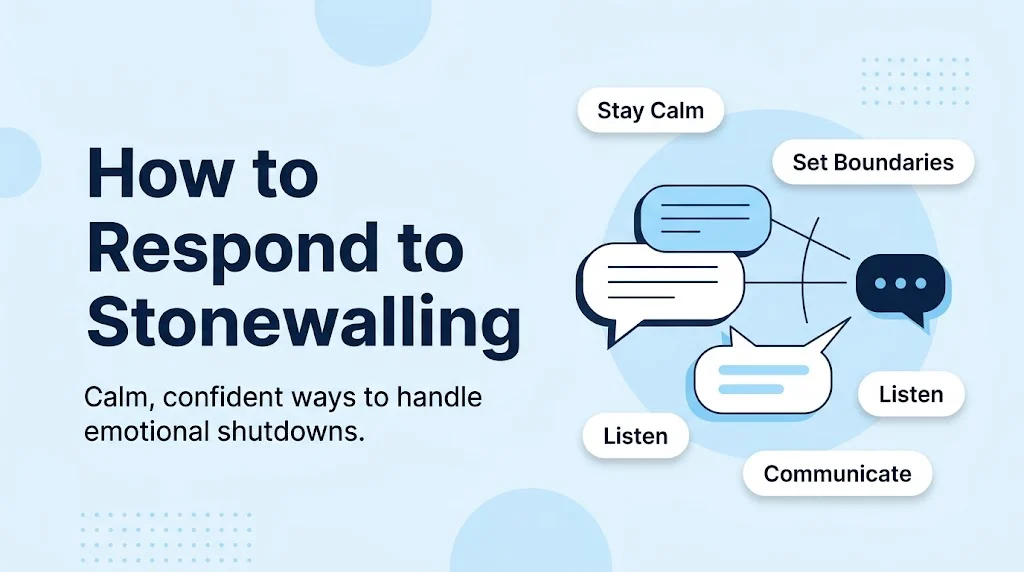
The best way to respond to stonewalling is to stay calm, express how the silence affects you, and set a clear boundary without chasing the other person. Whether you’re dealing with a partner, friend, family member, or coworker, choose a response that protects your peace while leaving room for healthy communication.
Top responses: “I’m ready to talk when you are,” “I need communication, not silence,” “Let’s take a break and revisit this,” “I’m not going to chase a conversation,” “My feelings deserve to be heard, too.”
Being ignored when you’re trying to solve a problem can feel incredibly frustrating. You send a message, ask what’s wrong, or try to explain your feelings, but the other person shuts down, refuses to respond, or acts like the conversation doesn’t exist. This behavior is often called stonewalling, and it can leave you feeling confused, hurt, or stuck wondering what to do next.
Whether it’s happening in a relationship, friendship, family situation, or workplace, knowing how to respond to stonewalling can help you communicate clearly without losing your peace. The goal isn’t to force someone to talk or win an argument. It’s to express your needs, respect reasonable boundaries, and recognize when silence has become an unhealthy pattern. From calm responses to firm boundary-setting statements, these ready-to-use replies will help you handle difficult conversations with confidence and self-respect.
1. Calm Responses to Stonewalling
- “I’m ready to talk when you’re ready to listen.”
Example: Use this when someone has stopped responding during a disagreement.
Meaning: You remain open to communication without forcing the conversation. - “We don’t have to solve everything right now.”
Example: Use this when emotions are running high and the other person has withdrawn.
Meaning: You acknowledge that taking a break can be helpful. - “Let’s take a little time and revisit this later.”
Example: Use this when a discussion feels too tense to continue productively.
Meaning: You suggest a pause rather than an endless standoff. - “I’m not here to fight. I want us to understand each other.”
Example: Use this when the other person assumes every discussion will become an argument.
Meaning: You communicate a desire for understanding instead of conflict. - “I can see that talking might be difficult right now.”
Example: Use this when someone seems overwhelmed or emotionally withdrawn.
Meaning: You acknowledge their possible feelings without making assumptions. - “We can talk when we’re both feeling calmer.”
Example: Use this after a heated exchange.
Meaning: You prioritize a more constructive conversation. - “I’m willing to hear your side whenever you’re ready.”
Example: Use this when someone refuses to explain their perspective.
Meaning: You leave the door open for honest communication. - “Let’s not make this harder by avoiding each other.”
Example: Use this when silence is making a disagreement more confusing.
Meaning: You encourage addressing the issue respectfully. - “I don’t need an immediate answer, but I would appreciate one eventually.”
Example: Use this when someone needs time to process a difficult topic.
Meaning: You respect their space while asking for follow-through. - “I’m going to give you some room, and we can reconnect later.”
Example: Use this when repeated attempts to talk are not helping.
Meaning: You step back without abandoning the possibility of resolution. - “I want to understand what you’re feeling.”
Example: Use this when someone has become unusually quiet after a disagreement.
Meaning: You invite them to share their perspective. - “We can disagree without shutting each other out.”
Example: Use this when different opinions lead to prolonged silence.
Meaning: You emphasize respectful communication despite disagreement. - “I care about resolving this, not winning.”
Example: Use this when the conversation feels like a competition.
Meaning: You focus on finding a solution together. - “I’ll listen when you’re comfortable sharing.”
Example: Use this when someone is not ready to explain their feelings.
Meaning: You offer patience without demanding immediate disclosure. - “Let’s give this conversation a chance when we’re ready.”
Example: Use this when both people need time to settle down.
Meaning: You encourage a thoughtful return to the discussion.
2. Confident Responses to Stonewalling
- “I’m willing to communicate, but I can’t do it alone.”
Example: Use this when you’re repeatedly making efforts to resolve a disagreement.
Meaning: You recognize that healthy communication requires participation from both people. - “My feelings deserve to be heard, too.”
Example: Use this when your concerns are repeatedly ignored.
Meaning: You affirm your right to express yourself. - “I can respect your space without ignoring my own needs.”
Example: Use this when someone asks for distance but never discusses the issue afterward.
Meaning: You balance their boundaries with your own. - “I’m not going to keep repeating myself to get a response.”
Example: Use this when you’ve explained your concern several times.
Meaning: You stop an exhausting cycle of repeated attempts. - “I’m open to a conversation, not an endless guessing game.”
Example: Use this when silence leaves you constantly wondering what went wrong.
Meaning: You ask for direct communication. - “I know what I need from a healthy conversation.”
Example: Use this when someone makes you question whether your request for communication is reasonable.
Meaning: You trust your understanding of respectful interaction. - “I won’t force you to talk, and I won’t ignore my own feelings.”
Example: Use this when the other person refuses to engage.
Meaning: You respect their choice while protecting your emotional needs. - “I can be patient without accepting this pattern forever.”
Example: Use this when withdrawal happens repeatedly.
Meaning: You distinguish patience from tolerating an ongoing problem. - “I’m asking for communication, not perfection.”
Example: Use this when someone avoids a discussion because they don’t know what to say.
Meaning: You explain that an honest effort is enough to begin. - “I deserve clarity instead of constant uncertainty.”
Example: Use this when prolonged silence leaves you confused about the relationship.
Meaning: You express your need for greater clarity. - “I won’t chase someone into having a conversation.”
Example: Use this when repeated messages are receiving no response.
Meaning: You choose to stop pursuing an unwilling conversation. - “My boundaries matter just as much as yours.”
Example: Use this when someone expects unlimited space without considering your needs.
Meaning: You emphasize mutual respect. - “I’m comfortable giving space, but I need honesty, too.”
Example: Use this when someone withdraws without explaining what’s happening.
Meaning: You want distance to be accompanied by clear communication. - “I can accept disagreement without accepting disrespect.”
Example: Use this when silence becomes a recurring response to conflict.
Meaning: You separate differences of opinion from unhealthy behavior. - “I know I can ask for a healthier way to communicate.”
Example: Use this when you feel guilty for raising a concern.
Meaning: You affirm that reasonable communication needs are valid.
3. Firm Boundary-Setting Responses
- “I respect your need for space, but I need us to revisit this conversation.”
Example: Use this when someone needs a break but the issue remains unresolved.
Meaning: You support a pause while requesting a return to the discussion. - “I’m not comfortable leaving important issues unresolved indefinitely.”
Example: Use this when serious concerns are repeatedly avoided.
Meaning: You set a limit on prolonged uncertainty. - “If you need a break, please tell me instead of disappearing.”
Example: Use this when someone stops responding without explanation.
Meaning: You request a clearer way to communicate the need for space. - “I won’t continue a pattern where difficult conversations never happen.”
Example: Use this when every disagreement ends with silence and no resolution.
Meaning: You identify an ongoing pattern that needs to change. - “I’m happy to pause, but I need us to agree on when to reconnect.”
Example: Use this when a conversation needs a cooling-off period.
Meaning: You suggest a practical boundary around taking space. - “I need respectful communication to continue this conversation.”
Example: Use this when the interaction becomes dismissive or unproductive.
Meaning: You establish the conditions needed for a constructive discussion. - “I won’t keep sending messages when I’m not getting a response.”
Example: Use this when your messages have gone unanswered repeatedly.
Meaning: You set a limit on how much you will pursue contact. - “I’m willing to work through problems, but not by myself.”
Example: Use this when you feel solely responsible for repairing a relationship.
Meaning: You expect shared responsibility. - “Let’s agree on a better way to handle disagreements.”
Example: Use this when the same pattern keeps repeating.
Meaning: You encourage a practical change in behavior. - “If now isn’t a good time, please suggest another time.”
Example: Use this when someone says they cannot talk.
Meaning: You respect their timing while encouraging follow-through. - “I need a relationship where concerns can be discussed.”
Example: Use this when communication problems are becoming a regular issue.
Meaning: You explain an important relationship need. - “I’m stepping back until we can communicate respectfully.”
Example: Use this when the interaction is no longer productive.
Meaning: You pause your involvement to protect your well-being. - “I won’t accept being punished for expressing my feelings.”
Example: Use this when silence repeatedly follows your attempts to raise concerns.
Meaning: You communicate that withdrawing contact as punishment is not acceptable to you. - “I need actions that support the communication we talk about.”
Example: Use this when someone promises to communicate but repeats the same behavior.
Meaning: You ask for meaningful and consistent change. - “If this pattern continues, I’ll need to reconsider how I participate in this relationship.”
Example: Use this when repeated attempts to improve communication have not worked.
Meaning: You state a serious boundary without making an empty threat.
4. Responses When Your Partner Is Stonewalling
- “I love being close to you, and I need us to talk through difficult moments.”
Example: Use this when a partner withdraws after a disagreement.
Meaning: You combine care with a clear communication need. - “I’m not asking you to fix everything right now. I just want us to communicate.”
Example: Use this when your partner seems overwhelmed by a serious conversation.
Meaning: You reduce pressure while keeping communication important. - “Can you tell me whether you need space or whether something else is going on?”
Example: Use this when your partner suddenly becomes distant.
Meaning: You ask for clarity instead of guessing. - “I want us to feel safe discussing uncomfortable things.”
Example: Use this when difficult topics repeatedly lead to silence.
Meaning: You express a desire for emotional safety. - “We don’t have to agree to treat each other with respect.”
Example: Use this when a disagreement turns into prolonged withdrawal.
Meaning: You reinforce mutual respect despite differences. - “I’m here to understand you, not attack you.”
Example: Use this when your partner seems defensive or unwilling to talk.
Meaning: You clarify your intention to understand rather than blame. - “I miss feeling connected when we have problems.”
Example: Use this when silence creates emotional distance.
Meaning: You express sadness about the disconnection. - “Can we find a way to take breaks without leaving each other confused?”
Example: Use this when your partner needs space during arguments.
Meaning: You suggest a healthier approach to cooling down. - “I want both of us to feel heard.”
Example: Use this when one or both partners feel misunderstood.
Meaning: You emphasize equal participation. - “I’m willing to work on my part if we’re both willing to try.”
Example: Use this when discussing repeated relationship conflicts.
Meaning: You show accountability while asking for mutual effort. - “I don’t want silence to become our way of handling every problem.”
Example: Use this when the same withdrawal pattern repeats.
Meaning: You express concern about the long-term effect. - “You can tell me you need time without shutting me out completely.”
Example: Use this when your partner needs a break but does not explain it.
Meaning: You encourage direct communication about personal space. - “I care about your feelings, and I need mine to matter, too.”
Example: Use this when the conversation centers entirely on your partner’s emotions.
Meaning: You ask for emotional reciprocity. - “Let’s focus on fixing the problem rather than avoiding it.”
Example: Use this when an unresolved disagreement keeps returning.
Meaning: You encourage shared problem-solving. - “I want a relationship where we can come back together after a hard conversation.”
Example: Use this when conflict repeatedly creates distance.
Meaning: You express a desire for repair and reconnection.
5. Responses to Stonewalling Over Text
- “I can see you’re not ready to reply. Let me know when you are.”
Example: Use this when your messages have gone unanswered during a disagreement.
Meaning: You acknowledge the silence without repeatedly messaging. - “I’m going to give this conversation some space for now.”
Example: Use this when texting is going nowhere.
Meaning: You pause the exchange instead of escalating it. - “I don’t want to argue over text. We can talk when we’re ready.”
Example: Use this when messages are becoming tense.
Meaning: You suggest a better setting for the conversation. - “Please let me know if you need time rather than leaving me guessing.”
Example: Use this when someone disappears in the middle of a discussion.
Meaning: You request a simple explanation. - “I’ll stop messaging for now. We can reconnect later.”
Example: Use this when several unanswered texts have made you feel frustrated.
Meaning: You step back without demanding an immediate response. - “I want to resolve this, but texting back and forth isn’t helping.”
Example: Use this when a difficult conversation keeps stalling over messages.
Meaning: You propose changing the communication method. - “When you’re ready, I’d appreciate an honest conversation.”
Example: Use this after a period of silence.
Meaning: You leave room for a direct discussion. - “I don’t want to assume what your silence means.”
Example: Use this when you are tempted to interpret unanswered messages.
Meaning: You avoid jumping to conclusions. - “A quick message saying you need space would help.”
Example: Use this when you do not know whether the person needs a break.
Meaning: You suggest a simple way to reduce uncertainty. - “I’m going to focus on my day and leave this here for now.”
Example: Use this when waiting for a reply is affecting your concentration.
Meaning: You redirect your attention instead of staying stuck on the conversation. - “You don’t have to answer immediately, but please don’t leave this unresolved forever.”
Example: Use this when the issue needs discussion but is not urgent.
Meaning: You balance patience with a need for follow-through. - “I’d rather talk openly than keep exchanging silence.”
Example: Use this when the conversation has completely stalled.
Meaning: You prefer direct communication. - “I’m open to hearing your perspective when you’re ready.”
Example: Use this when you want to leave the door open.
Meaning: You invite a response without chasing one. - “Let’s pick this up when we can both give it proper attention.”
Example: Use this when the conversation is happening at a bad time.
Meaning: You suggest a more suitable time to talk. - “I’ll give you space now, and I’d appreciate clarity when we reconnect.”
Example: Use this when you need to pause texting.
Meaning: You respect distance while communicating your expectations.
6. Responses When Someone Uses Silence to Punish You
- “I’m open to resolving the issue, but I don’t want silence to become punishment.”
Example: Use this when contact is repeatedly withdrawn after you express a concern.
Meaning: You distinguish healthy space from punitive silence. - “If you’re upset with me, I’d rather you tell me directly.”
Example: Use this when someone refuses to explain why they are angry.
Meaning: You invite honest communication. - “I can take responsibility for my mistakes without accepting silent treatment.”
Example: Use this when you have apologized but are still being ignored.
Meaning: You separate accountability from accepting unhealthy behavior. - “I’m willing to listen to what hurt you.”
Example: Use this when someone seems upset but will not explain why.
Meaning: You show openness to understanding their perspective. - “Ignoring me doesn’t help us understand each other.”
Example: Use this when silence is preventing resolution.
Meaning: You explain the effect of the behavior. - “I won’t guess what I did wrong. Please communicate with me.”
Example: Use this when you are repeatedly expected to figure out the reason for someone’s silence.
Meaning: You ask for directness instead of mind-reading. - “You can be upset without shutting down every conversation.”
Example: Use this when anger repeatedly leads to total withdrawal.
Meaning: You recognize their feelings while challenging the pattern. - “I’m not going to beg for basic communication.”
Example: Use this when you’ve made several sincere attempts to talk.
Meaning: You protect your dignity and stop pursuing a response. - “We can work through hurt without trying to hurt each other back.”
Example: Use this when the conflict feels retaliatory.
Meaning: You encourage repair rather than revenge. - “I want accountability from both of us.”
Example: Use this when one person is expected to apologize for everything.
Meaning: You emphasize shared responsibility. - “I won’t respond to silence by playing the same game.”
Example: Use this when you feel tempted to ignore the person in return.
Meaning: You choose not to escalate the pattern. - “If you need distance, tell me clearly.”
Example: Use this when someone disappears instead of explaining their needs.
Meaning: You request straightforward communication. - “I can acknowledge your hurt without accepting blame for everything.”
Example: Use this when the discussion becomes one-sided.
Meaning: You remain open to accountability without taking responsibility for every issue. - “I need us to address problems without withholding communication.”
Example: Use this when silence repeatedly follows disagreements.
Meaning: You set a standard for resolving conflict. - “I won’t keep participating in a cycle that leaves us both unheard.”
Example: Use this when the same painful pattern keeps repeating.
Meaning: You express a need for a different approach.
7. Responses to Stonewalling From a Friend
- “Hey, I feel like something has changed between us. Are we okay?”
Example: Use this when a friend becomes distant without explanation.
Meaning: You invite an honest check-in. - “I value our friendship, so I’d rather talk than guess.”
Example: Use this when a misunderstanding seems unresolved.
Meaning: You communicate that the friendship matters to you. - “If I upset you, I’m open to hearing about it.”
Example: Use this when you suspect a friend may be hurt.
Meaning: You invite feedback without assuming fault. - “I understand needing space, but I don’t know where we stand.”
Example: Use this when a friend stops communicating for an extended period.
Meaning: You express uncertainty while respecting their space. - “I’m happy to talk when you’re ready.”
Example: Use this when your friend is not ready to discuss an issue.
Meaning: You leave the invitation open. - “I’d rather clear up a misunderstanding than lose a friendship over silence.”
Example: Use this when a disagreement has created distance.
Meaning: You show that repairing the friendship matters. - “You don’t have to explain everything immediately, but I’d appreciate honesty.”
Example: Use this when a friend needs time to process a conflict.
Meaning: You combine patience with a request for openness. - “I’m not sure what’s happening, and I don’t want to make assumptions.”
Example: Use this when a friend suddenly stops replying.
Meaning: You ask for clarity instead of guessing. - “I miss our usual conversations.”
Example: Use this when a friendship feels distant.
Meaning: You express affection without demanding a response. - “Can we talk about what’s going on between us?”
Example: Use this when the distance has lasted long enough to concern you.
Meaning: You ask for a direct discussion. - “I’ll give you some space, but I hope we can reconnect.”
Example: Use this when a friend needs distance.
Meaning: You respect their space while expressing hope. - “Friendship should leave room for honest conversations.”
Example: Use this when important issues keep getting avoided.
Meaning: You explain what you value in a friendship. - “I’m willing to hear your side, even if it’s uncomfortable.”
Example: Use this when a friend seems reluctant to speak honestly.
Meaning: You show openness to difficult feedback. - “I care about our friendship, but I can’t repair it alone.”
Example: Use this when you are the only person trying to resolve the issue.
Meaning: You ask for mutual effort. - “Whenever you’re ready to talk respectfully, I’m open to it.”
Example: Use this when a conversation needs time and calmer emotions.
Meaning: You leave a path toward reconciliation while maintaining a boundary.
8. Responses to Stonewalling From Family Members
- “I care about our relationship, and I want us to communicate better.”
Example: Use this when a family disagreement has led to silence.
Meaning: You express care while encouraging improvement. - “We may see things differently, but we can still talk respectfully.”
Example: Use this when family members disagree about a personal decision.
Meaning: You separate disagreement from disrespect. - “I’m willing to listen, but I need you to listen to me, too.”
Example: Use this when family discussions feel one-sided.
Meaning: You ask for mutual understanding. - “Let’s take a break instead of avoiding the issue completely.”
Example: Use this when emotions are too intense for a productive conversation.
Meaning: You suggest a pause followed by communication. - “I don’t want this disagreement to turn into weeks of silence.”
Example: Use this when conflict often leads to prolonged family distance.
Meaning: You express concern about unresolved tension. - “You can disagree with me without shutting me out.”
Example: Use this when a family member stops communicating after a disagreement.
Meaning: You encourage respectful differences. - “I’d like us to find a way forward.”
Example: Use this when the same family conflict keeps returning.
Meaning: You focus on a possible solution. - “I can’t control whether you talk, but I can explain what I need.”
Example: Use this when a relative refuses to discuss a problem.
Meaning: You recognize their choice while expressing your needs. - “I’m not asking you to agree with everything I say.”
Example: Use this when a family member avoids a conversation because of differing opinions.
Meaning: You clarify that respectful discussion does not require agreement. - “I’d appreciate it if we could discuss this without shutting down.”
Example: Use this when communication repeatedly stops during disagreements.
Meaning: You ask for a healthier interaction. - “I want to solve the problem, not create a bigger divide.”
Example: Use this when family tension is growing.
Meaning: You emphasize repairing the relationship. - “Let’s talk when we can both be respectful.”
Example: Use this when the conversation has become emotionally charged.
Meaning: You set a reasonable condition for discussion. - “I respect your feelings, even when I see things differently.”
Example: Use this when a relative feels misunderstood.
Meaning: You acknowledge their perspective without abandoning yours. - “I hope we can discuss this when you’re ready.”
Example: Use this when you want to leave the door open.
Meaning: You invite future communication without pressure. - “I can love my family and still have boundaries.”
Example: Use this when you feel guilty for stepping back from an unhealthy interaction.
Meaning: You recognize that affection and personal limits can coexist.
9. Responses to Stonewalling at Work
- “I’d appreciate a response when you have a chance so we can move forward.”
Example: Use this when a coworker has not answered a work-related question.
Meaning: You politely request the information needed to proceed. - “Please let me know if there is a better time to discuss this.”
Example: Use this when a colleague avoids a scheduled conversation.
Meaning: You offer flexibility while seeking communication. - “I’m following up because this issue still needs a resolution.”
Example: Use this when an unanswered work message is delaying a task.
Meaning: You keep the discussion focused on the outstanding issue. - “Could you confirm how you’d like me to proceed?”
Example: Use this when a manager has not responded to a request for direction.
Meaning: You ask for clear next steps. - “I want to make sure we’re aligned before moving forward.”
Example: Use this when a team disagreement remains unresolved.
Meaning: You emphasize coordination and clarity. - “If you have concerns about my proposal, I’m happy to discuss them.”
Example: Use this when a coworker avoids giving feedback.
Meaning: You invite constructive criticism. - “Let’s find a time to address the outstanding questions.”
Example: Use this when an issue has been left hanging.
Meaning: You propose a practical next step. - “I want to resolve this professionally and keep the project moving.”
Example: Use this when communication problems are delaying work.
Meaning: You maintain a professional focus. - “Please let me know if someone else should be included in this discussion.”
Example: Use this when you cannot get a response from the appropriate colleague.
Meaning: You offer an alternative route to resolution. - “I’ll document the open questions so we can follow up clearly.”
Example: Use this when important work decisions remain unanswered.
Meaning: You create a clear record of what still needs attention. - “Could we agree on a timeline for responding to these requests?”
Example: Use this when repeated delays are affecting your work.
Meaning: You ask for a practical communication expectation. - “I’m available to discuss any concerns directly.”
Example: Use this when a colleague seems unwilling to address an issue.
Meaning: You invite a straightforward professional conversation. - “To avoid confusion, I’ll summarize what is still outstanding.”
Example: Use this when an email thread has stalled.
Meaning: You clarify the unresolved points. - “I’d like to keep our communication constructive and focused on solutions.”
Example: Use this when workplace tension affects collaboration.
Meaning: You encourage a solution-oriented approach. - “If we cannot resolve this directly, we may need to involve the appropriate manager.”
Example: Use this when an ongoing communication issue affects work.
Meaning: You explain a professional escalation option without personal attacks.
10. Short Responses to Stonewalling
- “I’m here when you’re ready.”
Example: Use this when someone needs time before talking.
Meaning: You remain available without pressure. - “Let’s talk when we’re calm.”
Example: Use this after a heated disagreement.
Meaning: You suggest a calmer time. - “I need clarity, not guessing.”
Example: Use this when silence leaves you uncertain.
Meaning: You ask for direct communication. - “Space is okay. Endless silence isn’t.”
Example: Use this when a break has become prolonged avoidance.
Meaning: You distinguish a healthy pause from an unresolved pattern. - “I’m open to talking.”
Example: Use this when you want to make your willingness clear.
Meaning: You invite communication. - “I won’t force a conversation.”
Example: Use this when someone refuses to engage.
Meaning: You respect their choice. - “Please tell me when you’re ready.”
Example: Use this when you need to know whether a discussion can resume.
Meaning: You request a clear signal. - “Let’s not leave this unresolved.”
Example: Use this when an important issue remains outstanding.
Meaning: You encourage follow-through. - “I’m willing to listen.”
Example: Use this when someone may feel unheard.
Meaning: You offer an opportunity to share. - “My feelings matter, too.”
Example: Use this when your concerns have been dismissed.
Meaning: You affirm your emotional needs. - “I need communication to move forward.”
Example: Use this when silence is preventing progress.
Meaning: You identify what is needed to resolve the issue. - “I’ll give you some space.”
Example: Use this when someone needs a break.
Meaning: You step back respectfully. - “Let’s find a better way.”
Example: Use this when the current communication pattern is not working.
Meaning: You invite a healthier approach. - “I’m not going to chase an answer.”
Example: Use this when you’ve already tried several times to talk.
Meaning: You set a limit on repeated pursuit. - “Respect goes both ways.”
Example: Use this when communication feels one-sided.
Meaning: You emphasize mutual consideration.
11. Responses That Encourage Healthy Communication
- “Can we talk about what makes these conversations difficult for us?”
Example: Use this when the same conflict repeatedly ends in silence.
Meaning: You invite reflection on the communication pattern. - “Would it help to take a short break and set a time to continue?”
Example: Use this when someone feels overwhelmed during a discussion.
Meaning: You offer a structured pause. - “I want to understand what you need when you feel overwhelmed.”
Example: Use this when a loved one withdraws during conflict.
Meaning: You seek to understand their experience. - “Can we agree to tell each other when we need space?”
Example: Use this when sudden silence causes confusion.
Meaning: You propose a shared communication rule. - “I’d like us to discuss problems before resentment builds.”
Example: Use this when unresolved issues keep accumulating.
Meaning: You encourage addressing concerns earlier. - “What would make this conversation feel more manageable?”
Example: Use this when someone struggles to participate in a difficult discussion.
Meaning: You invite them to suggest a more comfortable approach. - “Let’s focus on one issue at a time.”
Example: Use this when a conversation becomes overwhelming.
Meaning: You simplify the discussion. - “Can we agree to return to difficult conversations after a break?”
Example: Use this when taking space often turns into avoiding the topic.
Meaning: You encourage follow-through after cooling down. - “I’d like us both to have time to speak.”
Example: Use this when one person dominates the conversation.
Meaning: You encourage balanced participation. - “We can acknowledge each other’s feelings without agreeing on everything.”
Example: Use this when different perspectives make a discussion difficult.
Meaning: You separate emotional validation from agreement. - “Would writing down our concerns make this easier?”
Example: Use this when speaking face-to-face feels difficult.
Meaning: You offer an alternative communication method. - “Let’s try to understand before responding.”
Example: Use this when both people feel defensive.
Meaning: You encourage listening before reacting. - “I’d like us to find a solution that respects both of our needs.”
Example: Use this when a disagreement seems stuck.
Meaning: You aim for a mutually considerate outcome. - “Can we check in later and see how we’re both feeling?”
Example: Use this when emotions need time to settle.
Meaning: You suggest a follow-up conversation. - “If we keep getting stuck, would you consider getting support together?”
Example: Use this when recurring conflict is difficult to resolve alone.
Meaning: You suggest outside support, such as couples counseling when appropriate.
12. Responses When You’re Ready to Step Back
- “I’ve explained how I feel, so I’m going to step back for now.”
Example: Use this when you’ve made several attempts to communicate.
Meaning: You stop repeating yourself and give yourself room to breathe. - “I can’t make someone communicate, but I can choose what I participate in.”
Example: Use this when the other person refuses to engage.
Meaning: You recognize the limits of your control. - “I’m taking some time to focus on myself.”
Example: Use this when the situation is affecting your peace of mind.
Meaning: You prioritize your own well-being. - “I don’t want to keep repeating the same conversation without progress.”
Example: Use this when discussions repeatedly go nowhere.
Meaning: You acknowledge that the current approach is not working. - “I’ll be open to talking when we can both participate.”
Example: Use this when you want to pause an unproductive interaction.
Meaning: You leave room for mutual effort. - “I need some distance from this pattern.”
Example: Use this when repeated silence has become emotionally exhausting.
Meaning: You create space from the recurring behavior. - “I’m no longer going to make assumptions about what you want.”
Example: Use this when you’re tired of trying to interpret silence.
Meaning: You stop guessing and leave responsibility for communication with the other person. - “I can care about you and still protect my peace.”
Example: Use this when you feel guilty about stepping back.
Meaning: You recognize that caring for someone does not require ignoring your own needs. - “I need to see a real effort to change this pattern.”
Example: Use this when promises to communicate have not led to change.
Meaning: You ask for consistent action. - “I’m choosing not to argue with silence.”
Example: Use this when an interaction has become one-sided.
Meaning: You decide not to keep pushing for a response. - “I’ve done my part to open the conversation.”
Example: Use this when you have clearly expressed your willingness to talk.
Meaning: You acknowledge your effort without taking responsibility for the other person’s choices. - “I need relationships where difficult topics can be discussed.”
Example: Use this when communication problems keep affecting your relationships.
Meaning: You clarify an important personal standard. - “I’m going to stop trying to solve this on my own.”
Example: Use this when you feel responsible for fixing every disagreement.
Meaning: You recognize that resolution requires shared effort. - “I hope we can work this out, but I can’t do it alone.”
Example: Use this when you still want the relationship to improve.
Meaning: You express hope while being realistic about mutual responsibility. - “For now, I’m choosing peace over repeated conflict.”
Example: Use this when continued attempts to talk are making the situation worse.
Meaning: You choose to disengage from an unproductive cycle.
FAQs
What Does Stonewalling Mean?
Stonewalling is when someone withdraws from a conversation, stops responding, or refuses to engage during a disagreement.
What Is the Best Way to Respond to Stonewalling?
Stay calm, express your needs clearly, and avoid repeatedly chasing a response. You might say, “I’m willing to talk when you’re ready, but I need us to revisit this issue.”
Is Stonewalling the Same as Taking Space?
Not necessarily. Taking space can be healthy when someone explains that they need a break and makes an effort to reconnect.
How Do You Respond to Stonewalling in a Relationship?
Tell your partner how the silence affects you and ask for a more constructive way to handle conflict.
Should You Text Someone Who Is Stonewalling You?
You can send one calm, clear message explaining that you’re available to talk. After that, give the person space rather than sending repeated messages.
Conclusion
Responding to stonewalling isn’t about finding the perfect comeback that forces someone to speak. It’s about expressing yourself clearly, respecting reasonable space, and protecting your emotional well-being. Sometimes a calm message is enough to reopen communication. Other times, a firm boundary or a step back may be the healthier choice. Pay attention to patterns, not just promises, and remember that meaningful communication requires effort from both people.
You can care about someone without taking responsibility for every conversation or every unresolved problem. Save these responses for difficult moments, adapt them to your situation, and choose words that reflect your values. Your voice matters, too.
Discover More Related Articles:
- How to Respond to Happy Birthday | Funny, Sweet & Clever Replies In 2026
- How to Respond to WSP | Funny, Flirty, Cool & Clever Replies In 2026

Richard Scott is an experienced author dedicated to creating compelling and well-researched content for online audiences. As a contributor to Responary.com, he enjoys sharing knowledge through clear, engaging, and informative articles that connect with readers worldwide.